Quotessence
Home / Quotes / Quote by Norton Juster

Quote by Norton Juster

Work

The phantom tollbooth

In this classic children's book, Milo, a bored and uninterested boy, is transported into a magical realm where he encounters various characters and challenges. The story combines elements of fantasy, humor, and intellectual exploration, encouraging readers to think critically and enjoy the beauty of language and imagination. more

Author
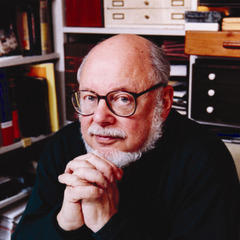
Norton Juster
Norton Juster

Norton Juster is an American author renowned for his children's literature. His most famous work, 'Charlotte's Web,' has been a beloved classic since its publication in 1952. Beyond children's literature, Juster has also ventured into adult fiction and poetry. more

You May Also Like

“Many a person over the years has tried- both successfully and unsuccessfully, to get rid of their inner demons. Those who are successful are deemed artists, those who are not are call dreamers at best and lunatics at worse. But where exactly resides that line on which two worlds collide? Does somebody know? Is somebody fit to tell? Who's to say that those deemed lunatics are not just successes on the making? Who says that those who claim to be just a tad bit crazy are not just as crazy as those that had completely lost it? Maybe, and bear with me here…everyone is as crazy as the one before them and the next one could ever possibly be. Maybe at the end- it's just that some have mastered creating a façade of calmness and collection while others don't bother going through all that trouble anymore, if they ever did. Perhaps we all have demons…it's just that some people have demons far more toxic and difficult to ignore than others.”

“Exposition is a mode of thought, a method of learning, and a means of expression. Almost all of the characteristics we associate with mature discourse were amplified by typography, which has the strongest possible bias toward exposition: a sophisticated ability to think conceptually, deductively and sequentially; a high valuation of reason and order; an abhorrence of contradiction; a large capacity for detachment and objectivity; and a tolerance for delayed response.”

“Life is a great big beautiful three-ring circus. There are those on the floor making their lives among the heads of lions and hoops of fire, and those in the stands, complacent and wowed, their mouths stuffed with popcorn. I know less now than ever about life, but I do know its size. Life is enormous. Much grander than what we’ve taken for ourselves, so far. When the show is over and the tent is packed, the elephants, lions and dancing poodles are caged and mounted on trucks to caravan to the next town. The clown’s makeup has worn, and his bright, red smile has been washed down a sink. All that is left is another performance, another tent and set of lights. We rest in the knowledge: the show must go on. Somewhere, behind our stage curtain, a still, small voice asks why we haven’t yet taken up juggling. My seminars were like this. Only, instead of flipping shiny, black bowling balls or roaring chainsaws through the air, I juggled concepts. The world is intrinsically tied together. All things march through time at different intervals but move ahead in one fashion or another. Though we may never understand it, we are all part of something much larger than ourselves—something anchoring us to the spot we have mentally chosen. We sniff out the rules, through spiritual quests and the sciences. And with every new discovery, we grow more confused. Our inability to connect what seems illogical to unite and to defy logic in our understanding keeps us from enlightenment. The artists and insane tiptoe around such insights, but lack the compassion to hand-feed these concepts to a blind world. The interconnectedness of all things is not simply a pet phrase. It is a big “T” truth that the wise spend their lives attempting to grasp.”