Quotessence
Home / Quotes / Quote by Roland Barthes

Quote by Roland Barthes

Work

Camera Lucida: Reflections on Photography

Browse quotes and source details for this work. more

Author
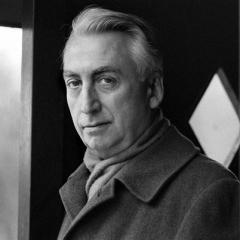
Roland Barthes
Roland Barthes

Roland Barthes (November 12, 1915 – March 25, 1980) was a French philosopher, literary critic, semiotician, and sociologist. He was a leading figure in structuralism and post-structuralism, known for his profound insights into semiotics, cultural criticism, and literary theory. His works, such as Mythologies, S/Z, and The Death of the Author, challenged traditional notions of authorship and meaning, emphasizing the multiplicity of texts and the active role of readers. Barthes' interdisciplinary approach influenced cultural studies, media analysis, and postmodern thought, making him one of the most influential intellectuals of the 20th century. more

You May Also Like

“As I observe the passage of time, I find an increasing appreciation for the concept of departure from this realm, not from a place of sorrow, but rather from an evolving sense of disconnection from a civilization that appears to be loosening its hold on intellect and decorum. The vernacular and idioms humans employ are shifting, less focused on the conveyance of ideas and more on the provocation of reaction or disdain. It is perplexing to witness linguistic constructs, across various tongues like Spanish, being repurposed not for their original intent but as subtle derogations. My aversion has always been towards the trivialization of language through vulgarity or derision masquerading as cleverness, particularly when it belittles or scoffs. Once, I entertained notions of altering the societal fabric, aspiring to refine the dialogue, yet now I grasp the insight in transforming one's own essence instead. Perhaps the ultimate retreat lies not in relocating to another dimension but in transcending to a higher state of consciousness, where the cacophony of this world becomes merely a faint murmur.”

“So that to give a commentary on the text, such as we are attempting here, is to reinforce the illusion that a present meaning exists–that a text can be presented. When I try to present a commentary (as I am doing here), I necessarily resist the suction of the play of meanings which attempts to suck any such attempt–which it produces–back into a void. If I try to explain the text, I forget that the production of my explanation is already related to its dissolution, its disappearance into a textual void, a void between any two readings, a void which is always already producing another reading, and its dissolution.”

“Another thing, documentary is not enough. It has its contribution - a valuable one - to make; in education, in exposition, in social argument, in training artist and audience to a feeling for physical material, in extending and sensitising kinetic responses, in extracting and communicating relevant paces and rythms from national life. But the effect of documentary, though it may be inspirational, will always be limited. John Grierson, Scotland's one cinematic genius and founder of British documentary, still leads the movement with his theory. He is, though he would hate to think it, an idealist with a naïve, little-boy feeling for the marvel and complexity of social organisations. He believes that Man has only to limit his vision and see himself and his world in a certain light and he will attain a kind of happiness. Regrettably or otherwise, Scotland has not the habit of half shutting its eyes to what it values as precious, and while it has appreciated and employed documentary for the potentialities listed above, it has not squared its shoulders very perceptibly before Mr. Grierson's simplifications.”