Quotessence
Home / Quotes / Quote by Leo Tolstoy

Quote by Leo Tolstoy

“Millions of men, renouncing their human feelings and reason, had to go from west to east to slay their fellows, just as some centuries previously hordes of men had come from the east to the west slaying their fellows.”

Quote by Leo Tolstoy

Work

War and Peace

A profound and sweeping narrative that delves into the complexities of human relationships and the impact of historical events on individuals, "War and Peace" is renowned for its rich character development and intricate portrayal of the Napoleonic era. more
Author

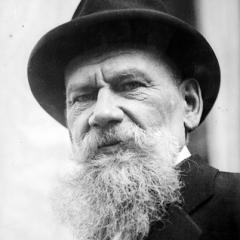
Leo Tolstoy
Leo Tolstoy

Leo Tolstoy was a Russian writer and thinker, a prominent representative of 19th-century Russian literature. His works deeply revealed social contradictions and human nature, and had a profound impact on the world. more

You May Also Like

“Weir heard something different in the sounds. Once, during a period of calm, he sat on the firestep waiting for Stephen to return from an inspection and listened to the music of the tins. The empty ones were sonorous, the fuller ones provided an ascending scale. Those filled to the brim produced only a fat percussive beat unless they overbalanced, when the cascade would give a loud variation. Within earshot there were scores of tins in different states of fullness and with varying resonance. Then he heard the wire moving in the wind. It set up a moaning background noise that would occasionally gust into prominence, then lapse again to mere accompaniment. He had to work hard to discern, or perhaps imagine, a melody in this tin music, but it was better in his ears than the awful sound of shellfire.”

Book:Birdsong

“This is stupid." "Look. You think how stupid people are most of the time. Old men drink. Women at a village fair. Boys throwing stones at birds. Life. The foolishness and the vanity, the selfishness and the waste. The pettiness, the silliness. You think in war it must be different. Must be better. With death around the corner, men united against hardship, the cunning of the enemy, people must think harder, faster, be...better. Be heroic. Only it's just the same. In fact do you know, because of all that pressure, and worry, and fear, it's worse. There aren't many men who think clearest when the stakes are highest. So people are even stupider in war than the rest of the time. Thinking about how they'll dodge the blame, or grab the glory, or save their skins, rather than about what will actually work. There's no job that forgives stupidity more than soldiering. No job that encourages it more.”

“I did not say anything. I was always embarrassed by the words sacred, glorious, and sacrifice and the expression in vain. We had heard them, sometimes standing in the rain almost out of earshot, so that only the shouted words came through, and had read them on proclamations that were slapped up by billposters over other proclamations, now for a long time, and I had seen nothing sacred, and the things that were glorious had no glory and the sacrifices were like the stock yards at Chicago if nothing was done with the meat except to bury it.”

“She (the little Naga woman – Ma Roi) told him (Captain Gribble) of hundreds of refugees being held up at the Namyung river, and planes unable to drop supplies because of the weather: “Please hurry to Tagap Ga,” she pleaded, “We will show you the way. All the rivers will soon be in flood, trees will be blown down, the track curling up and down the steep sides of the mountain will be obliterated.” She concluded with great emphasis, “There are four big rivers to cross!”. “The situation is becoming dreadfully complicated by the weather,” I said to myself, “the outlook is horrible.”