Quotessence
Home / Quotes / Quote by John Gardner

Quote by John Gardner

“Go ahead, scoff, he said, petulant. Except in the life of a hero, the whole world's meaningless. The hero sees values beyond what's possible. That's the nature of a hero. It kills him, of course, ultimately. But it makes the whole struggle of humanity worthwhile.”

Quote by John Gardner

Book:Grendel

Work

Grendel

Grendel is a narrative poem that delves into the life of a fearsome creature, Grendel, who attacks the Danish kingdom of Heorot. The poem, rich in symbolism and philosophical depth, examines the nature of good and evil, the role of the individual within a community, and the cyclical nature of violence. Written in a modern style, it challenges traditional heroic narratives and invites readers to reconsider the boundaries between human and monster. more

Author

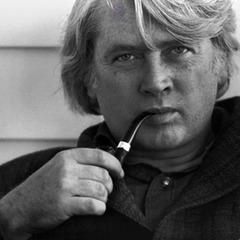
John Gardner
John Gardner

John Gardner, born on July 21, 1933, was an influential American novelist of the mid-20th century. Known for his profound character development and imaginative storytelling, his works have been highly appreciated by readers. more

You May Also Like

“There are no self made heroes or leaders. No matter how rugged or self assured, everyone requires a cast of players - friends, mentors, lovers, critics, villains and supporters - who call, invite, seduce, goad and encourage them to finally step into their true power. We are all heroes and leaders in some way, and we all need each other.”

“As I stated earlier, I do not believe there is anything inherently wrong with even the most overused elements of epic fantasy. Magic swords, dragons, destined heroes -- even dark lords and ultimate evils can legitimately be used in literature of serious intent, not just mocked in satirical meta-fiction. To claim that they cannot would be much the same as claiming that nothing good can ever again be done with fiction involving detectives, or young lovers, or unhappy families. The value of a fictive element is not an inherent quality, but a contextual one, determined by its relationship to the other elements of the story it is embedded in. In other words, whether a scene in which a dragon is introduced is affecting, amusing, or agonizingly dull depends primarily on the choices made by the scene's author. I say "primarily" because dragons have appeared in thousands of stories over the centuries, and almost any reader may be presumed to have been exposed to at least one such. The reader's reaction will naturally be influenced by how they feel this new dragon compares to the dragons which they have been introduced to in the past. (Favorably, one would hope. A dragon must learn to make a good first impression if it is to do well in this life.) Such variables are out of the author's control, as are any unreasoning prejudices against dragons on the part of the reader. All that can be done is to make the dragon as vivid and well-suited for its purpose as is possible. If all the elements of fantasy and fiction in a work are fitted to their purposes and combine to create a moving story set in a convincing world, that work will presumably be a masterpiece.”