Quotessence
Home / Quotes / Quote by Neil Postman

Quote by Neil Postman

Work

Conscientious Objections: Stirring Up Trouble About Language, Technology and Education

Conscientious Objections examines the intricate relationship between language, technology, and education, analyzing how these elements shape our world. The book provides a thought-provoking examination of the ways in which these areas intersect and influence one another, encouraging readers to consider the implications of their use and the potential consequences. more

Author
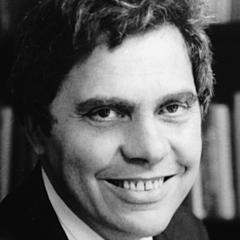
Neil Postman
Neil Postman

Neil Postman (March 8, 1931 - October 5, 2003) was an American cultural critic, educator, and author. Known for his profound insights into the relationship between media, technology, and culture, Postman's work has had a significant impact on modern society. more

You May Also Like

“The super-salesman neither permits his subconscious mind to "broadcast" negative thoughts nor give expression to them through words, for the reason that he understands that "like attracts like" and negative suggestions attract negative action and negative decisions from prospective buyers.”

“To go straight to the deepest depth, I went for Hegel; what unclear thoughtless flow of words I was to find there! My unlucky star led me from Hegel to Schopenhauer . . . Even in Kant there were many things that I could grasp so little that given his general acuity of mind I almost suspected that he was pulling the reader's leg or was even an imposter.”

“Demetrius was wont to say that there was no difference between the words and speech of the unskilled and ignorant and the sounds and rumblings caused by the stomach being full of superfluous wind. This he said, not without reason, for, as he held, it did not in the least matter from what part of them the voice emanated, whether from the lower parts or the mouth, since the one and the other were of equal worth and importance.”

“The most remarkable feature about the magnitude scale was that it worked at all and that it could be extended on a worldwide basis. It was originally envisaged as a rather rough-and-ready procedure by which we could grade earthquakes. We would have been happy if we could have assigned just three categories, large, medium, and small; the point is, we wanted to avoid personal judgments. It actually turned out to be quite a finely tuned scale.”