Quotessence
Home / Quotes / Quote by Simon Critchley

Quote by Simon Critchley

Work

Impossible Objects

This book delves into the fascinating world of impossible objects, examining the intricate relationships between their visual representations and the logical contradictions they embody. It offers an in-depth analysis of the psychological and cognitive aspects of perceiving these objects, as well as their historical significance in art and design. more
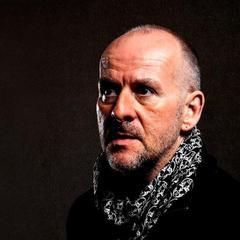
Author

Simon Critchley
Simon Critchley

Simon Critchley is a British philosopher known for his contributions to existentialism and ethics. His work covers a wide range of topics, including political philosophy, aesthetics, and moral philosophy. Critchley's research interests include the ideas of philosophers such as Heidegger, Nietzsche, and Foucault. more

You May Also Like

“We live in a world that is dominated by science. And that's not a bad thing - not at all. But one of the problems with the scientific worldview is that it leads human beings to have an overwhelmingly theoretical relationship to the world. For example, I no longer accept my being in the world practically and then try to describe that or elucidate that; rather, I see the world theoretically as colors and objects and representations which are fed through my retina into the brain.”

“When I started out playing guitar and singing, I was about twelve, going on thirteen. The role models for me back then were the folk singers. They all had these high, really nice voices and ranges, like Judy Collins and Joan Baez, and then later, of course, Joni Mitchell and Linda Ronstadt. I decided early on that I was going to learn how to write songs really, really well, because I didn't want to have to compete as a singer. I didn't feel that it was my strong point.”

“I think we start suffering as soon as we come out of the womb. I think that people tend to stereotype. When they think of suffering, they think of abuse - physical abuse, emotional abuse, poverty, that kind of thing. There's different levels of suffering. I don't think that it has to do with how much money you have - if you were raised in the ghetto or the Hamptons. For me it's more about perception: self-perception and how you perceive the world.”