Quotessence
Home / Quotes / Quote by Judith Butler

Quote by Judith Butler

“I reject totally the characterization of a transwoman as a mutilated man. First, that formulation presumes that men born into that sex assignment are not mutilated. Second, it once again sets up the feminist as the prosecutor of trans people. If there is any mutilation going on in this scene, it is being done by the feminist police force who rejects the lived embodiment of transwomen. That very accusation is a form of "mutilation" as is all transphobic discourse such as these.”

Quote by Judith Butler

Author
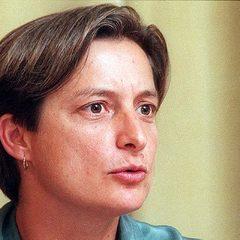
Judith Butler
Judith Butler

Judith Butler is a renowned philosopher, born on February 24, 1956. Her research focuses on issues of gender, identity, and power, having a profound impact on postmodernism and gender theory. more

You May Also Like

“Intersectionality has made an important contribution to social and political analysis, asking all of us to think about what assumptions of race and class we make when we speak about "women" or what assumptions of gender and race we make when we speak about "class." It allows us to unpack those categories and see the various kinds of social formations and power relations that constitute those categories.”

“We have to find a way of understanding how one category of sex can be "assigned" from both and another sense of sex can lead us to resist and reject that sex assignment. How do we understand that second sense of sex? It is not the same as the first - it is not an assignment that others give us. But maybe it is an assignment we give ourselves? If so, do we not need a world of others, linguistic practices, social institutions, and political imaginaries in order to move forward to claim precisely those categories we require, and to reject those that work against us?”

“Some trans people thought that in claiming that gender is performative that I was saying that it is all a fiction, and that a person's felt sense of gender was therefore "unreal." That was never my intention. I sought to expand our sense of what gender realities could be. But I think I needed to pay more attention to what people feel, how the primary experience of the body is registered, and the quite urgent and legitimate demand to have those aspects of sex recognized and supported.”

“[Transsexual surgery] could be likened to political psychiatry in the Soviet Union. I suggest that transsexualism should best be seen in this light, as directly political, medical abuse of human rights. The mutilation of healthy bodies and the subjection of such bodies to dangerous and life-threatening continuing treatment violates such people's rights to live with dignity in the body into which they were born.”