“But the older he grew and the more intimately he came to know his brother, the oftener the thought occurred to him that the power of working for the general welfare – a power of which he felt himself entirely destitute – was not a virtue but rather a lack of something: not a lack of kindly honesty and noble desires and tastes, but a lack of the power of living, of what is called heart – the aspiration which makes a man choose one out of all the innumerable paths of life that present themselves, and desire that alone.”
Quote by Leo Tolstoy
Work
The Complete Works of Leo Tolstoy: Novels, Short Stories, Plays, Memoirs, Letters & Essays on Art, Religion and Politics: Anna Karenina, War and Peace, Resurrection, The Death of Ivan Ilych, A Confession, The Cossacks, Correspondences with Gandhi, The Kreutzer Sonata, Fables and Stories for Childrenand Many More
The Complete Works of Leo Tolstoy is a comprehensive compilation of the renowned author's extensive body of work. It features his most famous novels, such as Anna Karenina and War and Peace, as well as his shorter stories, plays, and personal reflections. The collection also includes letters and essays that delve into Tolstoy's thoughts on art, religion, and politics, offering a comprehensive view of his intellectual and creative pursuits. This collection is essential for anyone interested in the works of Leo Tolstoy and the rich tapestry of Russian literature. more
Author
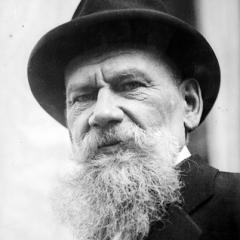
Leo Tolstoy
Leo Tolstoy was a Russian writer and thinker, a prominent representative of 19th-century Russian literature. His works deeply revealed social contradictions and human nature, and had a profound impact on the world. more
You May Also Like
“There are many answers, none of them right, but some of them most definitely wrong.”
Source: My Year of Meats
“When you die it's the same as if everybody else did too.”
Source: The Road film tie-in
Source: The Crying of Lot 49
Source: Imaginations
Source: On the Road
Source: A Tree Grows in Brooklyn
“The beautiful is as useful as the useful." He added after a moment’s silence, "Perhaps more so.”
Source: Les Miserables Volume One