“This was the greatest gift that he had, the talent that fitted him for war; that ability not to ignore but to despise whatever bad ending there could be. This quality was destroyed by too much responsibility for others or the necessity of undertaking something ill planned or badly conceived. For in such things the bad ending, failure, could not be ignored. It was not simply a possibility of harm to one's self, which could be ignored. He knew he himself was nothing, and he knew death was nothing. He knew that truly, as truly as he knew anything. In the last few days he had learned that he himself, with another person, could be everything. But inside himself he knew that this was the exception. That we have had, he thought. In that I have been most fortunate. That was given to me, perhaps, because I never asked for it. That cannot be taken away nor lost. But that is over and done with now on this morning and what there is to do now is our work.”
Quote by Ernest Hemingway
Work
This classic novel delves into the intense experiences of a group of individuals during the tumultuous Spanish Civil War. The narrative follows Robert Jordan, an American dynamiter, as he navigates the complexities of love and the harsh realities of war. The story is rich with philosophical musings on the nature of life and death, making it a profound exploration of human existence. more
Author
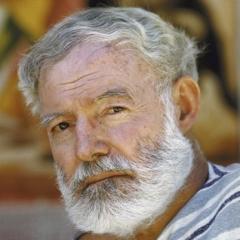
American author known for his concise and forceful writing style, as well as his profound insights into life. Hemingway's works cover a wide range of themes including war, adventure, and love, with notable titles such as 'The Old Man and the Sea' and 'A Farewell to Arms'. more
You May Also Like
“Trev, all you had to do was breathe to make me want you.”
“And that's humbling, knowing that your voice can mean so much to another person.”
“My whole life had split in two: Smith and not Smith. I liked the Smith parts of it so much better.”
“What branch does not have its leaves and which twig will not have its flowers?”
“For the first time in my life I was admitting defeat.”