Quotessence
Home / Quotes / Quote by Pierre Duhem

Quote by Pierre Duhem

“If the aim of physical theories is to explain experimental laws, theoretical physics is not an autonomous science; it is subordinate to metaphysics.”

Quote by Pierre Duhem

Author
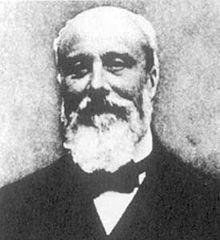
Pierre Duhem
Pierre Duhem

Pierre Duhem (June 9, 1861 – September 14, 1916) was a French physicist, historian of science, and philosopher of science. He is best known for his contributions to thermodynamics, fluid mechanics, and elasticity theory, as well as his groundbreaking work in the philosophy of science, particularly the Duhem-Quine thesis. Duhem argued that scientific hypotheses cannot be tested in isolation but are always embedded within a broader theoretical framework. He also made significant contributions to the history of medieval science, challenging the notion of the 'Dark Ages' by highlighting the role of medieval scholars in laying the foundations for modern science. His major works include 'The Aim and Structure of Physical Theory' and 'The System of the World.' more

You May Also Like

“In 1975, ... [speaking with Shiing Shen Chern], I told him I had finally learned ... the beauty of fiber-bundle theory and the profound Chern-Weil theorem. I said I found it amazing that gauge fields are exactly connections on fiber bundles, which the mathematicians developed without reference to the physical world. I added, "this is both thrilling and puzzling, since you mathematicians dreamed up these concepts out of nowhere." He immediately protested: "No, no. These concepts were not dreamed up. They were natural and real."”

“In fact, Gentlemen, no geometry without arithmetic, no mechanics without geometry... you cannot count upon success, if your mind is not sufficiently exercised on the forms and demonstrations of geometry, on the theories and calculations of arithmetic ... In a word, the theory of proportions is for industrial teaching, what algebra is for the most elevated mathematical teaching.”

“It has been said by a distinguished philosopher that England is "usually the last to enter into the general movement of the European mind." The author of the remark probably meant to assert that a man or a system may have become famous on the continent, while we are almost ignorant of the name of the man and the claims of his system. Perhaps, however, a wider range might be given to the assertion. An exploded theory or a disadvantageous practice, like a rebel or a patriot in distress, seeks refuge on our shores to spend its last days in comfort if not in splendour.”

“It is easy to make out three areas where scientists will be concentrating their efforts in the coming decades. One is in physics, where leading theorists are striving, with the help of experimentalists, to devise a single mathematical theory that embraces all the basic phenomena of matter and energy. The other two are in biology. Biologists-and the rest of us too-would like to know how the brain works and how a single cell, the fertilized egg cell, develops into an entire organism”

“No theory ever agrees with all the facts in its domain, yet it is not always the theory that is to blame. Facts are constituted by older ideologies, and a clash between facts and theories may be proof of progress. It is also a first step in our attempt to find the principles implicit in familiar observational notions.”