“Could one imagine a stone's having consciousness? And if anyone can do so-why should that not merely prove that such image-mongery is of no interest to us?”
Quote by Ludwig Wittgenstein
Work
Philosophical Investigations
Ludwig Wittgenstein's Philosophical Investigations is a profound and influential text that delves into the complexities of human thought and understanding. The book is structured as a series of dialogues and reflections, examining concepts such as meaning, truth, and the nature of philosophical problems. Wittgenstein challenges traditional philosophical assumptions and proposes a new approach to understanding language and its role in shaping our perceptions of the world. more
Author
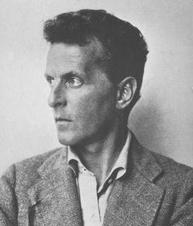
Ludwig Wittgenstein
Ludwig Wittgenstein was one of the most important philosophers of the 20th century, renowned for his profound contributions to language, logic, and philosophical methods. His ideas have had a significant impact on the development of analytic philosophy and philosophy of language. more
You May Also Like
Source: Consciousness, function, and representation
“[R]eason is... given to us as a practical faculty, that is, as one that influences the will.”
“I conceive ethics as a branch of psychology.”
Source: The Possibility of Altruism