Quotessence
Home / Quotes / Quote by David Hume

Quote by David Hume

Work

An Enquiry Concerning Human Understanding; [with] A Letter from a Gentleman to His Friend in Edinburgh; [and] An Abstract of a Treatise of Human Nature

This book is a comprehensive examination of the fundamental principles of human knowledge, perception, and reason. It includes a letter discussing philosophical ideas and an abstract summarizing a broader treatise on human nature. more

Author
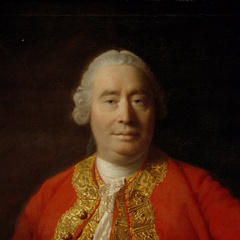
David Hume
David Hume

David Hume, born on May 7, 1711, in Edinburgh, Scotland, and died on August 25, 1776, was an outstanding philosopher, historian, and economist. Known for his contributions to empiricism and skepticism, his works have had a profound impact on subsequent philosophy, economics, and psychology. more

You May Also Like

“Battles, revolutions, pestilence, famine, and death, are never the effect of those natural causes, which we experience. Prodigies,omens, oracles, judgments, quite obscure the few natural events, that are intermingled with them. But as the former grow thinner every pagewe soon learn, that there is nothing mysterious or supernatural in the case, but that all proceeds from the usual propensity of mankind towards the marvellous, and that, though this inclination may at intervals receive a check from sense and learning, it can never be thoroughly extirpated.”

“[The sceptic] must acknowledge, if he will acknowledge any thing, that all human life must perish, were his principles to prevail.All discourse, all action would immediately cease, and men remain in a total lethargy, till the necessities of nature, unsatisfied, put an end to their miserable existence.”

“There is, indeed a more mitigated scepticism or academical philosophy, which may be both durable and useful, and which may, in part, be the result of this Pyrrhonism, or excessive scepticism, when its undistinguished doubts are corrected by common sense and reflection.”

“It is not contrary to reason to prefer the destruction of the whole world to the scratching of my finger. It is not contrary to reason for me to choose my total ruin, to prevent the least uneasiness of an Indian, or person wholly unknown to me. It is as little contrary to reason to prefer even my own acknowledged lesser good to my greater, and have a more ardent affection for the former than the latter.”

“Let us become thoroughly sensible of the weakness, blindness, and narrow limits of human reason: Let us duly consider its uncertainty and endless contrarieties, even in subjects of common life and practice.... When these topics are displayed in their full light, as they are by some philosophers and almost all divines; who can retain such confidence in this frail faculty of reason as to pay any regard to its determinations in points so sublime, so abstruse, so remote from common life and experience?”

“There is an universal tendency among mankind to conceive all beings like themselves, and to transfer to every object, those qualities, with which they are familiarly acquainted, and of which they are intimately conscious. We find human faces in the moon, armies in the clouds; and by a natural propensity, if not corrected by experience and reflection, ascribe malice or good-will to every thing, that hurts or pleases us.”

“Luxury, or a refinement on the pleasures and conveniences of life, had long been supposed the source of every corruption in government, and the immediate cause of faction, sedition, civil wars, and the total loss of liberty. It was, therefore, universally regarded as a vice, and was an object of declamation to all satyrists, and severe moralists.”