Quotessence
Home / Quotes / Quote by Francis Crick

Quote by Francis Crick

Author

Francis Crick
Francis Crick

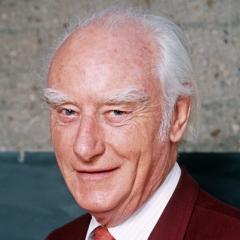
Francis Crick was a renowned scientist known for his significant contributions to the field of molecular biology. He, along with James Watson, was awarded the Nobel Prize in Physiology or Medicine in 1962 for their discovery of the double-helix structure of DNA. Crick's research had a profound impact on understanding the transmission of genetic information and the genetic basis of organisms. more

You May Also Like

“The business of proving evolution has reached a stage when it is futile for biologists to work merely to discover more and more evidence of evolution. Those who choose to believe that God created every biological species separately in the state we observe them, but made them in a way calculated to lead us to the conclusion that they are the products of an evolutionary development are obviously not open to argument. All that can be said is that their belief is an implicit blasphemy, for it imputes to God an appalling deviousness.”

“It is obvious that the great majority of humans throughout history have had grossly, even ridiculously, unrealistic concepts of the world. Man is, among many other things, the mistaken animal, the foolish animal. Other species doubtless have much more limited ideas about the world, but what ideas they do have are much less likely to be wrong and are never foolish. White cats do not denigrate black, and dogs do not ask Baal, Jehovah, or other Semitic gods to perform miracles for them.”

“I believe that our Heavenly Father invented man because he was disappointed in the monkey. I believe that whenever a human being, of even the highest intelligence and culture, delivers an opinion upon a matter apart from his particular and especial line of interest, training and experience, it will always be an opinion of so foolish and so valueless a sort that it can be depended upon to suggest to our Heavenly Father that the human being is another disappointment and that he is no considerable improvement upon the monkey.”

“Rhetoric is useful because the true and the just are naturally superior to their opposites, so that, if decisions are improperly made, they must owe their defeat to their own advocates; which is reprehensible. Further, in dealing with certain persons, even if we possessed the most accurate scientific knowledge, we should not find it easy to persuade them by the employment of such knowledge. For scientific discourse is concerned with instruction, but in the case of such persons instruction is impossible.”