“Justice while she winks at crimes, Stumbles on innocence sometimes.”
Quote by Samuel Butler
Work
Hudibras: In three parts, written in the time of the late wars
This work is a long, mock-heroic poem composed in three parts during the period of the English Civil Wars. It follows the titular character, Sir Hudibras, a self-important and hypocritical Presbyterian knight, and his squire, Ralpho, as they embark on a series of absurd adventures. The poem uses a burlesque style to satirize the Puritan faction, their theological disputes, and the broader political turmoil of the era. Written in a distinctive octosyllabic couplet meter, it is considered a landmark of English satire, known for its witty, often coarse humor and its critical portrayal of ideological extremism. more
Author
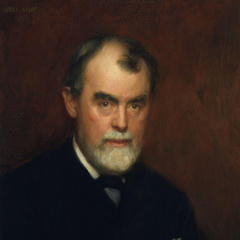
Samuel Butler
Samuel Butler was an English author and philosopher, renowned for his satirical novel Erewhon and his philosophical writings. Born on December 4, 1835, he was a prominent figure during the Victorian era, influencing both literature and thought. Butler's most celebrated work, Erewhon, was published in 1872. The novel is a satirical commentary on Victorian society and explores the concept of a utopian society. He also authored several philosophical works, including The Way of All Flesh, which was controversial for its criticism of religion and morality. Butler's contributions to literature and philosophy have had a lasting impact. His satirical style and exploration of complex themes have established him as a significant figure in Victorian literature. Despite his controversial views, he remains celebrated for his intellectual contributions. more
You May Also Like
“Of course, I thought I was badass at sixteen, too. Wait, I was badass at sixteen. Oh, yeah.”
Source: The Dead Girls' Dance
“Never set your stomach for a jelly-bread sandwich until you're sure there's some jelly!”
Source: The Cement Garden
“Come on sempai, would you please stop growing mushrooms in other people's closets? -Haruhi”
“Of course, the downside of attending a fictional school is that our lacrosse team sucks.”
Source: Heist Society
Source: The Rare Jewel of Christian Contentment ...
“Man is the only animal that laughs and has a state legislature.”