“For things remain possible, even if God does not choose them. Indeed, even if God does not will something to exist, it is possible for it to exist, since, by its nature, it could exist if God were to will it to exist.”
Quote by Gottfried Leibniz
Work
Leibniz: Philosophical Essays
This volume brings together a selection of essays by the German philosopher and mathematician Gottfried Wilhelm Leibniz, offering readers an overview of his mature thought. The works cover central themes such as the theory of monads, the principle of sufficient reason, pre-established harmony, and the nature of substance and perception. The essays reflect Leibniz's efforts to reconcile mechanistic science with teleological and theological principles, and his engagement with the philosophical debates of his time, including those with Descartes, Spinoza, and Locke. The collection provides insight into Leibniz's systematic vision of a rational universe and his contributions to early modern philosophy. more
Author
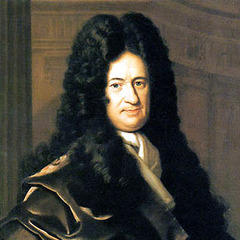
Gottfried Leibniz
German mathematician, philosopher, historian, and inventor. Gottfried Leibniz is one of the founders of calculus and has made significant contributions to mathematics, philosophy, history, and other fields. more
You May Also Like
Source: Leibniz: Philosophical Essays
Source: Leibniz: Philosophical Essays
“All I want to do is be onstage. A performer needs to perform.”
Source: Leibniz: Philosophical Essays
Source: Leibniz: Philosophical Essays
Source: Leibniz: Philosophical Essays