“As in political revolutions, so in paradigm choice-there is no standard higher than the assent of the relevant community... this issue of paradigm choice can never be unequivocally settled by logic and experiment alone.”
Quote by Thomas Kuhn
Work
The Structure of Scientific Revolutions
This influential book delves into the historical development of scientific theories, examining how they evolve and transform over time. It introduces the concept of paradigm shifts and their role in scientific revolutions, offering a framework for understanding the nature of scientific progress. more
Author
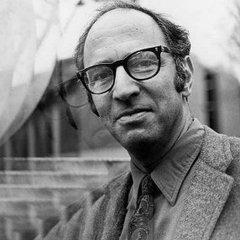
Thomas Kuhn
Thomas Kuhn (July 18, 1922 - June 17, 1996) was an influential American philosopher of science, known for his contributions to the theory of scientific revolution. His work has had a profound impact on the fields of philosophy of science, history of science, and science studies. more
You May Also Like
Source: The Structure of Scientific Revolutions: 50th Anniversary Edition
“I just had my 30th birthday and we went turkey shooting. It's what I wanted to do, so we went.”
Source: Bertrand Russell on God and Religion
Source: Common School Journal
“If you say what you think don't expect to hear only what you like.”
“Unity, to be real, must stand the severest strain without breaking.”
Source: Communal Unity
“One is a member of a country, a profession, a civilization, a religion. One is not just a man.”