“It is no very good symptom, either of nations or individuals, that they deal much in vaticination. Happy men are full of the present, for its bounty suffices them; and wise men also, for its duties engage them. Our grand business undoubtedly is not to see what lies dimly at a distance, but to do what clearly lies at hand.”
Quote by Thomas Carlyle
Work
Critical and Miscellaneous Essays: Burns. Life of Heyne. German playwrights. Voltaire. Novalis. Signs of the times. On history. Appendix: Jean Paul Friedrich Richter's review of Madame De Stael's 'Allemagne.' Schiller, Goethe and Madame De Stael
This book is a compilation of scholarly essays and analyses that delve into the lives and works of prominent literary figures such as Burns, Heyne, Voltaire, Novalis, Schiller, and Goethe. It covers a range of topics, including the history of German literature, the impact of Voltaire and Novalis, and the cultural and historical context of the time. The book also features an appendix containing a review of Madame De Stael's 'Allemagne' by Jean Paul Friedrich Richter. more
Author
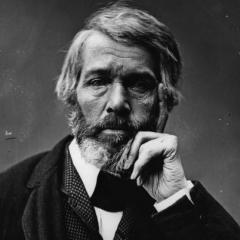
Thomas Carlyle
Thomas Carlyle, born on December 4, 1795, and died on February 5, 1881, was a prominent Scottish philosopher, historian, and writer. His works are known for their profound social criticism and unique literary style, which had a significant impact on 19th-century British literature and thought. more
You May Also Like
Source: Works
Source: The Works of the Right Hon. Edmund Burke: With a Biographical and Critical Introduction, and Portrait After Sir Joshua Reynolds
Source: The Inherent Evils of All State Governments Demonstrated: Being a Reprint of [his] Essay,
Source: Lacon: Or, Many Things in Few Words, Addressed to Those who Think
Source: Lacon: Or Many Things in Few Words Addressed to Those who Think
Source: The works of James Abram Garfield. (2 Volumes) Volume 2
Source: The works of James Abram Garfield. (2 Volumes) Volume 2
Source: The Works of Robert G. Ingersoll