Quotessence
Home / Quotes / Quote by Philip K. Chapman

Quote by Philip K. Chapman

“Our generation may stand at a crucial breakpoint in history, for we in the presently affluent nations may be the last who can afford to open up the high frontier. What we do during the next ten or twenty years may determine whether future generations will live in a humane and rewarding society, or whether they will spend their lives in desperate contention for the dwindling sustenance afforded by our limited terrestrial resources.”

Quote by Philip K. Chapman

Author
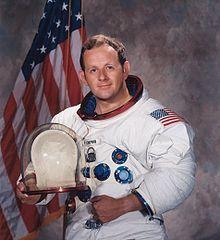
Philip K. Chapman
Philip K. Chapman

Philip K. Chapman is an American astronaut born on March 5, 1935. He served as an engineer and astronaut for NASA, participating in the Apollo program and becoming the third person to walk on the Moon in 1969. more

You May Also Like

“I firmly believe that we who are alive and can think today-in the closing years of the 20th century-have a commitment to our species to make sure that the flicker of movement we have thus managed in space stays sufficiently kindled so that the people of the 21st century can build upon and extend the human abode from Earth to the cosmos beyond.”

“We should be most careful about retreating from the specific challenge of our age. We should be reluctant to turn our back upon the frontier of this epoch... We cannot be indifferent to space, because the grand slow march of our intelligence has brought us, in our generation, to a point from which we can explore and understand and utilize it. To turn back now would be to deny our history, our capabilities.”

“If two or three hundred years from now an earthbound civilization is dying ... and they look back at the opportunity that we have here at the close of the twentieth century to move out into space and they see that we didn't do anything with it ... I don't want history to judge us on having blown this opportunity, and I think history will judge us on this more than on any other issue.”

“In the long run, the only solution I see to the problem of diversity is the expansion of mankind into the universe by means of green technology... Green technology means we do not live in cans but adapt our plants and our animals and ourselves to live wild in the universe as we find it... When life invades a new habitat, she never moves with a single species. She comes with a variety of species, and as soon as she is established, her species spread and diversify further. Our spread through the galaxy will follow her ancient pattern.”

“If you are reading this, and feel discouraged by an inability to communicate to others your own feelings about the importance of an active space development effort, comfort yourself with this thought. If you want to be on the leading edge of anything, you have by definition to be a couple of standard deviations away from most people. That makes you an odd-ball. The trick is to learn to accept it, then to like it-and keep on making lots of noise for what you believe in.”

“Boswell: But, Sir is it not somewhat singular that you should happen to have Cocker's Arithmetic about you on your journey? Dr. Johnson: Why, Sir if you are to have but one book with you upon a journey, let it be a book of science. When you read through a book of entertainment, you know it, and it can do no more for you; but a book of science is inexhaustible.”

“Observation and theory get on best when they are mixed together, both helping one another in the pursuit of truth. It is a good rule not to put overmuch confidence in a theory until it has been confirmed by observation. I hope I shall not shock the experimental physicists too much if I add that it is also a good rule not to put overmuch confidence in the observational results that are put forward until they have been confirmed by theory.”

“The scientist is a practical man and his are practical (i.e., practically attainable) aims. He does not seek the ultimate but the proximate. He does not speak of the last analysis but rather of the next approximation. His are not those beautiful structures so delicately designed that a single flaw may cause the collapse of the whole. The scientist builds slowly and with a gross but solid kind of masonry. If dissatisfied with any of his work, even if it be near the very foundations, he can replace that part without damage to the remainder.”