Quotessence
Home / Quotes / Quote by Stanley Elkin

Quote by Stanley Elkin

Author

Stanley Elkin
Stanley Elkin

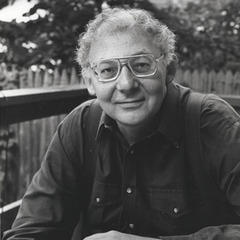
Stanley Elkin was an American novelist known for his distinctive humor and profound psychological insights. His works often explore the complexities of family, identity, and the human condition. Born on May 11, 1930, he passed away on May 31, 1995. more

You May Also Like

“The adoption of the required attitude of mind towards ideas that seem to emerge "of their own free will" and the abandonment of the critical function that is normally in operation against them seem to be hard of achievement for some people. The "involuntary thoughts" are liable to release a most violent resistance, which seeks to prevent their emergence. If we may trust that great poet and philosopher Friedrich Schiller, however, poetic creation must demand an exactly similar attitude.”

“When you describe the miserable and unfortunate, and want to make the reader feel pity, try to be somewhat colder - that seems to give a kind of background to another's grief, against which it stands out more clearly. Whereas in your story the characters cry and you sigh. Yes, be more cold. ... The more objective you are, the stronger will be the impression you make.”

“You need not expect to get your book right the first time. Go to work and revamp or rewrite it. God only exhibits his thunder and lightning at intervals, and so they always command attention. These are God's adjectives. You thunder and lightning too much; the reader ceases to get under the bed, by and by.”

“Cross out as many adjectives and adverbs as you can. ... It is comprehensible when I write: "The man sat on the grass," because it is clear and does not detain one's attention. On the other hand, it is difficult to figure out and hard on the brain if I write: "The tall, narrow-chested man of medium height and with a red beard sat down on the green grass that had already been trampled down by the pedestrians, sat down silently, looking around timidly and fearfully." The brain can't grasp all that at once, and art must be grasped at once, instantaneously.”