Quotessence
Home / Quotes / Quote by Thelonious Monk

Quote by Thelonious Monk

Author

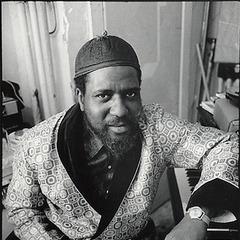
Thelonious Monk
Thelonious Monk

Thelonious Monk, born on October 10, 1917, was an influential jazz pianist, composer, and arranger from the United States. Known for his unique musical style and innovative composition techniques, Monk has had a profound impact on the development of jazz music. more

You May Also Like

“I don't consider myself a musician who has achieved perfection and can't develop any further. But I compose my pieces with a formula that I created myself. Take a musician like John Coltrane. He is a perfect musician, who can give expression to all the possibilities of his instrument. But he seems to have difficulty expressing original ideas on it. That is why he keeps looking for ideas in exotic places. At least I don't have that problem, because, like I say, I find my inspiration in myself.”

“It’s like a language. You learn the alphabet, which are the scales. You learn sentences, which are the chords. And then you talk extemporaneously with the horn. It’s a wonderful thing to speak extemporaneously, which is something I’ve never gotten the hang of. But musically I love to talk just off the top of my head. And that’s what jazz music is all about.”

“My life is music, and in some vague, mysterious and subconscious way, I have always been driven by a taut inner spring which has propelled me to almost compulsively reach for perfection in music, often - in fact, mostly - at the expense of everything else in my life.”

“Switch to piano! No. Really, if you like an instrument that sings, play the saxophone. At its best it's like the human voice. Of course, it would be best if you could actually sing with your own voice. The saxophone is an imperfect instrument, especially the tenor and soprano, as far as intonation goes. Therefore, the challenge is to sing on an imperfect instrument or 'voice' that is outside of your body. I love that challenge and have for over forty-five years. As far as playing jazz, no other art form, other than conversation, can give the satisfaction of spontaneous interaction.”