“They taught me that no man could be their leader except he ate the ranks' food, wore their clothes, lived level with them, and yet appeared better in himself.”
Quote by T. E. Lawrence
Work
Lawrence of Arabia: The Man Behind the Myth (Complete Autobiographical Works, Memoirs & Letters): Seven Pillars of Wisdom (Memoirs of the Arab Revolt) + The Evolution of a Revolt + The Mint (Memoirs of the secret service in Royal Air Force) + Collected Letters (1915-1935)
This collection brings together the extensive writings of T.E. Lawrence, covering his experiences during the Arab Revolt, his service in the Royal Air Force, and his personal correspondence. It includes 'Seven Pillars of Wisdom,' a detailed account of his role in the Arab Revolt, 'The Evolution of a Revolt,' which delves into the historical context, 'The Mint,' which chronicles his secret service activities, and 'Collected Letters,' offering a glimpse into his personal life and thoughts. more
Author
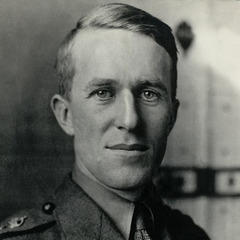
T. E. Lawrence
Thomas Edward Lawrence (August 16, 1888 – May 19, 1935), known as T. E. Lawrence or Lawrence of Arabia, was a British military officer, archaeologist, and writer. He gained fame for his role in leading the Arab Revolt against the Ottoman Empire during World War I. Born in Wales and educated at Oxford University, he initially worked on archaeological excavations in the Middle East. During the war, he served as a British liaison officer, employing guerrilla tactics to capture Aqaba and Damascus. After the war, he advocated for Arab independence at the Paris Peace Conference but failed. He later enlisted in the Royal Air Force under pseudonyms. His memoir, Seven Pillars of Wisdom, became a classic. Lawrence's life inspired numerous films and books, cementing his legacy as a legendary figure. more
You May Also Like
“Nobody has yet found a way of bombing that can prevent foot soldiers from walking.”
“If the entire Union Army comes across here, I will kill them all!”
Source: The Modern Library Civil War Bookshelf 5-Book Bundle: Personal Memoirs, Uncle Tom's Cabin, The Red Badge of Courage, Jefferson Davis: The Essential Writings, The Life and Writings of Abraham Lincoln
Source: The Influence of Sea Power upon the French Revolution and Empire 1793-1812 (Complete)
“Free supplies and open retreat are two essentials to the safety of an army or a fleet.”
Source: Mahan on Naval Warfare
Source: The Memoirs of Marshal Mannerheim