Quotessence
Home / Quotes / Quote by David Hume

Quote by David Hume

Work

Delphi Complete Works of David Hume (Illustrated)

The Delphi Complete Works of David Hume (Illustrated) is a meticulously curated compilation of Hume's extensive writings, covering his philosophical, historical, and political essays. This illustrated edition aims to provide readers with a rich and accessible experience of Hume's intellectual contributions, featuring detailed illustrations that complement the text. more

Author
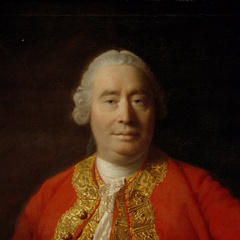
David Hume
David Hume

David Hume, born on May 7, 1711, in Edinburgh, Scotland, and died on August 25, 1776, was an outstanding philosopher, historian, and economist. Known for his contributions to empiricism and skepticism, his works have had a profound impact on subsequent philosophy, economics, and psychology. more

You May Also Like

“Here I shall add that the concept of change, and with it the concept of motion, as change of place, is possible only through and in the representation of time. & Motion, for example, presupposes the perception of something movable. But space considered in itself contains nothing movable; consequently motion must be something which is found in space only through experience -in other words, is an empirical datum.”

“This can never become popular, and, indeed, has no occasion to be so; for fine-spun arguments in favour of useful truths make just as little impression on the public mind as the equally subtle objections brought against these truths. On the other hand, since both inevitably force themselves on every man who rises to the height of speculation, it becomes the manifest duty of the schools to enter upon a thorough investigation of the rights of speculative reason, and thus to prevent the scandal which metaphysical controversies are sure, sooner or later, to cause even to the masses.”

“I agree with you that it is important to examine our presuppositions, throughly and once for all, in order to establish something solid. For I hold that it is only when we can prove all that we bring forward that we perfectly understand the thing under consideration. I know that the common herd takes little pleasure in these researches, but I know also that the common herd take little pains thoroughly to understand things.”