Quotessence
Home / Quotes / Quote by David Lynch

Quote by David Lynch

“The feature film has changed a lot. Art houses are gone and people show a certain type of cinema in the big theaters now that, you know, it's not quite really good for me, and if I made a feature film, I was think I'd play in LA and New York for a week, and then go right to television.”

Quote by David Lynch

Author
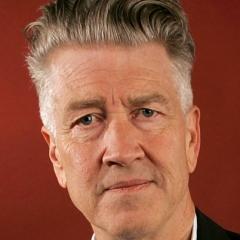
David Lynch
David Lynch

David Lynch is a renowned American film director, born on January 20, 1946. His works are known for their unique style and profound thematic exploration, with notable films including 'Blue Velvet' and 'Mulholland Drive'. Lynch's films often delve into dreams, madness, and supernatural phenomena, leaving a lasting impact on directors and the art of cinema. more

You May Also Like

“You can't just blurt the information out to the Russian foreign minister and the Russian ambassador. What happens is, the information goes back to the CIA, to the originating office. The CIA will pull the relevant information out of the report, put it on a new blank sheet of paper and then type at the top, "Secret releasable to Russia." That way, nobody gets in trouble, no sources and methods are revealed, everybody's happy, and we can establish something of a liaison relationship to the Russians. That's not what the president did.”

“I've never heard a White House staff say that the president was too stupid or too ill-informed to have broken the law. And that's really what it comes down to. The truth is, he leaked highly classified information that he shouldn't have leaked. It's one thing to say, "Hey, I'm the president. Nobody can punish me for that." It's another thing entirely to just deny that he did it. We know that he did it. And he really ought to own up to it.”

“Sometimes we deliberate - for example when we plan a long trip or - if we are not math wizards - when we solve long division problems. However, if we deliberated every time we acted we would never get through the day. Most of the time, we act for reasons without deliberation. I am not just talking about cases of simple, habitual action, like brushing your teeth, but also about more sophisticated action.”

“A very tall man once asked a question after my talk. Before beginning his question, he explained that the reason he was standing up is not to be intimidating but rather to make eye contact. His question was essentially "are we really interested in moral motives? Isn't it all about action?". I pointed out to him that it was not enough for him to do the right thing - stand up - but he also wanted me to know that he is doing it from the right motive or for the right reason - to make eye contact, rather than to be intimidating. Voila, moral psychology.”