Quotessence
Home / Quotes / Quote by Wole Soyinka

Quote by Wole Soyinka

“For many playwrights, they write the plays anyway because they've got to be, the work has been started, it's got to be finished, but we all long, I think, to see the plays fleshed out on stage and I'm exactly like that. Yes, I'm not satisfied until I actually see it on stage.”

Quote by Wole Soyinka

Author
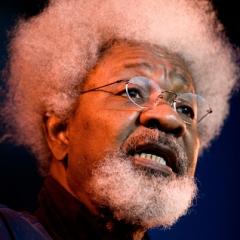
Wole Soyinka
Wole Soyinka

Wole Soyinka is a renowned Nigerian writer, playwright, poet, and political activist. Born on July 13, 1934, in Abeokuta, Nigeria, Soyinka is known for his profound social commentary and critical literary works. His writings span various forms, including drama, poetry, and fiction, often exploring themes of race, class, colonialism, and African identity. more

You May Also Like

“With theatre, you can interpret the most complex play on stage for it have meaning to an audience because you're dealing in images, you're dealing in action, you can use different idioms to interpret and clarify something which is obscured in the reading and of course there are different kinds of play, there are mythological plays, there are what I call the dramatic sketches, direct political theatre which is virtually everybody, but I find that you can use the stage as a social vehicle, you know, which any kind of audience.”

“I never know who's influencing me at any time. I mean, I can take a play by Brecht and adapt it, I'm consciously adapting that play, or, as I've done with the Greek classics, Euripides and Oedipus, and I'm consciously adapting that play. Whether it influences me or not, I think it's the critics, the analysts who have to decide that. Me, I don't feel that I'm under the influence of any such sources.”

“The gods in Yoruba mythology are not remote at all. They're benign, they're malign, they are mischievous, like Eshu for instance, tricksters, rascally, fornicators, that's a similarity to Greek mythology, for instance, you know. They're not saints, they're not saints. They're powerful. It's why they're not tyrannical. Of course, a number of them are also very, you know, benevolent, you know, there are saintly virtues to be found in them.”

“I do not believe that it is necessarily the duty of the writer to give a voice to his community. If a writer is true to his vocation, to his or her vocation, the very process of creativity enlarges these human horizons. It provides insights, even when you're not writing, when your writing's not dealing with a concrete political situation.”