Quotessence
Home / Quotes / Quote by Charles Kingsley

Quote by Charles Kingsley

“You are literally filled with the fruit of your own devices, with rats and mice and such small deer, paramecia, and entomostraceæ, and kicking things with horrid names, which you see in microscopes at the Polytechnic, and rush home and call for brandy-without the water-stone, and gravel, and dyspepsia, and fragments of your own muscular tissue tinged with your own bile.”

Quote by Charles Kingsley

Author
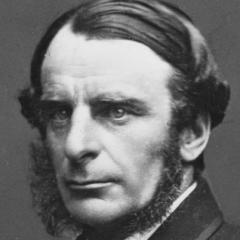
Charles Kingsley
Charles Kingsley

Charles Kingsley was a British professor, born on June 12, 1819, and died on January 23, 1875. He is known for his contributions to literature and education. more

You May Also Like

“Descartes, the father of modern philosophy ... would never-so he assures us-have been led to construct his philosophy if he had had only one teacher, for then he would have believed what he had been told; but, finding that his professors disagreed with each other, he was forced to conclude that no existing doctrine was certain.”

“The demand for certainty is one which is natural to man, but is nevertheless an intellectual vice. If you take your children for a picnic on a doubtful day, they will demand a dogmatic answer as to whether it will be fine or wet, and be disappointed in you when you cannot be sure.”

“Men always fool themselves when they give up experience for systems born of the imagination. Man is the work of nature, he exists in nature, he is subject to its laws, he can not break free, he can not leave even in thought; it is in vain that his spirit wants to soar beyond the bounds of the visible world, he is always forced to return.”

“If you assume continuity, you can open the well-stocked mathematical toolkit of continuous functions and differential equations, the saws and hammers of engineering and physics for the past two centuries (and the foreseeable future).”

“Qu. 31. Have not the small Particles of Bodies certain Powers, Virtues or Forces, by which they act at a distance, not only upon the Rays of Light for reflecting, refracting and reflecting them, but also upon one another for producing a great part of the Phænomena of Nature?”