Quotessence
Home / Quotes / Quote by Josef Pieper

Quote by Josef Pieper

“Unless we regain the art of silence and insight, the ability for nonactivity, unless we substitute true leisure for our hectic amusements, we will destroy our culture and ourselves.”

Quote by Josef Pieper

Author
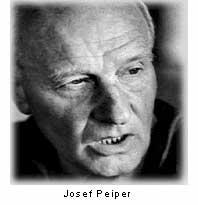
Josef Pieper
Josef Pieper

Josef Pieper was a German philosopher known for his research into the Western philosophical tradition and his critical analysis of modern culture. His works covered various fields such as ethics, political philosophy, and aesthetics, and had a profound impact on contemporary philosophy and the intellectual world. more

You May Also Like

“Other animals can make sounds, and sounds can indicate pleasure and pain. But language, a distinctly human capacity, isn´t just for registering pleasure and pain. It´s about declaring what is just and what is unjust, and distinguishing right from wrong. We don´t grasp these things silently, and then put words to them; language is the medium through which we discern and deliberate about the good.”

“If the spirit of their intercourse were still the same after their coming together as it had been when they were living apart,' Aristotle writes, their association can't really be considered a polis, or political community. 'A polis is not an association for residence on a common site, or for the sake of preventing mutual injustice and easing exchange.' While these conditions are necessary to a polis, they are not sufficient. 'The end and purpose of a polis is the good life, and the institutions of social life are means to that end.”

“Parental love is not contingent on the talents and attributes the child happens to have. We choose our friends and spouses at least partly on the basis of qualities we find attractive. But we do not choose our children. Their qualities are unpredictable, and even the most conscientious parents cannot be held wholly responsible for the kind of child they have. That is why parenthood, more than other human relationships, teaches what the theologian William F. May calls an “openness to the unbidden.”