Quotessence
Home / Quotes / Quote by William H. Gass

Quote by William H. Gass

“For me, the short story is not a character sketch, a mouse trap, an epiphany, a slice of suburban life. It is the flowering of a symbol center. It is a poem grafted onto sturdier stock.”

Quote by William H. Gass

Author
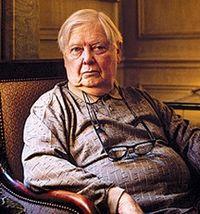
William H. Gass
William H. Gass

William H. Gass, born on July 30, 1924, is an accomplished American novelist. His works are renowned for their unique style and profound philosophical insights, making him a significant figure in 20th-century American literature. more

You May Also Like

“I want you to try and remember what it was like to have been very young. And particularly the days when you were first in love; when you were like a person sleepwalking, and you didn’t quite see the street you were in, and didn’t quite hear everything that was said to you. You’re just a little bit crazy. Will you remember that, please?”

“Acceptable rules of conduct were suspended when it came to the spoon shortage. The deficit had gotten so bad that prices were all but unaffordable, and dynastic spoon succession had become a matter of considerable interest. Spoons were even postcode engraved and carried on one's person to eliminate theft, and good table manners, one of the eight pillars upon which the Collective was built, had been relaxed to allow tea to be stirred - shockingly - with the handle of a fork.”

“From barren brown stems to glistening leaf-buds; from the leaf-buds to snowy virginity of bloom…It was like a flute song forgotten in another existence and remembered again. What? How? Why? This singing she heard that had nothing to do with her ears. The rose of the world was breathing out smell. It followed her through all her waking moments and caressed her in her sleep.”

“If we wish to draw philosophical conclusions about our own existence, our significance, and the significance of the universe itself, our conclusions should be based on empirical knowledge. A truly open mind means forcing our imaginations to conform to the evidence of reality, and not vice versa, whether or not we like the implications.”