Quotessence
Home / Quotes / Quote by Vik Muniz

Quote by Vik Muniz

“Only in the 20th century, artists started taking the study of perception in a more humane way. They were thinking about the eye as being an instrument, the whole body as being a visual instrument. That sort of gave way a little bit with Cartesian­ - the "Cogito ergo sum" argument. It's not, "I think therefore I exist." It's, "I feel therefore I think therefore I exist."”

Quote by Vik Muniz

Author
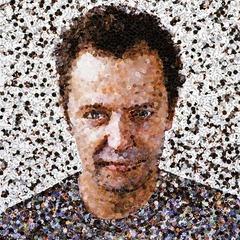
Vik Muniz
Vik Muniz

Vik Muniz, born on December 20, 1961, is a Brazilian artist known for his unique approach to using non-traditional materials in his work, such as garbage, sugar, and sand. His art often focuses on social and environmental issues, conveying profound social messages through the medium of art. more

You May Also Like

“We need saints; we need this head - this talking head - to communicate. Every single religion you have people that go in-between, that can talk to god or communicate ideas. Then there are the talking heads in the news every time we watch TV. No matter how complex, you still need a person there to tell you what happened: a storyteller of sorts. I find that fascinating that we feel so attached to this primitive mode of connection, this primitive interface to the world.”

“I think art is the development of this interface between mind and matter, between mind and phenomenon, between what's inside of us and what's happening outside of us. It developed over the course of the last 35,000 years. We made a lot of improvements because it not only gave us the tools to understand the world better, but it also gave us better and better tools to do it. It's that continuous relationship: technology and discernment.”

“Every time you show something to somebody they're going in one direction, when they see that thing you did they're going to go off track - maybe towards a direction that you think is more important. They'll be more discerning, they'll probably see things a little bit more profoundly, they'll spend more time trying to understand what's in front of them.”