Quotessence
Home / Quotes / Quote by Blanche Wiesen Cook

Quote by Blanche Wiesen Cook

“Well, the reality of her father was that he was a very diseased alcoholic, who died at the age of 34. And one always has to pause to wonder how much you have to drink to die at 34. And he was a really tragic father. I mean, he was absolutely unreliable. He was absolutely involved with various people. He had outside families, outside children, outside wives. He made his wife's life miserable. And she [Eleanor Roosevelt]ignored all of his faults and retained this sense of him as the perfect father.”

Quote by Blanche Wiesen Cook

Author
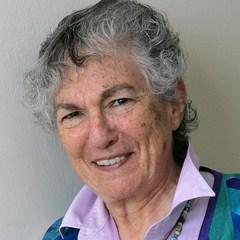
Blanche Wiesen Cook
Blanche Wiesen Cook

Blanche Wiesen Cook is an American scholar specializing in the study of American history and feminism. Born on April 20, 1941, she is renowned for her in-depth research on the role of women in American history. more

You May Also Like

“It's interesting to me that really one of the first things she [Eleanor Roosevelt]did as First Lady was to collect her father's letters and publish a book called The Letters of My Father, essentially, hunting big game, The Letters of Elliott Roosevelt. And it really was an act of redemption, really one of her first acts of redemption as she entered the White House. She was going to redeem her father's honor. And publishing his letters, reconnecting with her childhood really fortified her to go on into the difficult White House years.”

“Well, when Eleanor Roosevelt's mother dies, she goes to live with her Grandmother Hall. And her Grandmother Hall is in mourning. She's in widow's weeds. She's in her 50s, but appears very old. And she's exhausted from raising rather out-of-control children. Her favorite daughter, Anna, has died (Eleanor's mother), and she has living at home two other sons, Vallie and Eddie. And they are incredible sportsmen, incredible drinkers, out-of-control alcoholics.”

“In one way, it is this sense of order and also love that, I think, really saved Eleanor Roosevelt's life. And in her own writing, she's very warm about her grandmother, even though, if you look at contemporary accounts, they're accounts of horror at the Dickensian scene that Tivoli represents: bleak and drear and dark and unhappy. But Eleanor Roosevelt in her own writings is not very unhappy about Tivoli.”

“I think her Grandmother Hall gave her a great sense of family love, and reassurance. Her grandmother did love her, like her father, unconditionally. And despite the order and the discipline - and home at certain hours and out at certain hours and reading at certain hours - there was a surprising amount of freedom. Eleanor Roosevelt talks about how the happiest moments of her days were when she would take a book out of the library, which wasn't censored.”

“Eleanor Roosevelt loved to write. She was a wonderful child writer. I mean, she wrote beautiful essays and stories as a child. And Marie Souvestre really appreciated Eleanor Roosevelt's talents and encouraged her talents. Also, she spoke perfect French. She grew up speaking French. She's now at a french-speaking school where, you know, girls are coming from all over the world. Not everybody speaks French.”

“Eleanor Roosevelt's very helpful to a lot of children who cannot speak French, who do not write well. And Marie Souvestre is fierce. She tears up students' papers that are not, you know, perfect. And Eleanor Roosevelt goes around, again, being incredibly helpful to children in need, children in trouble. And her best friends are the naughtiest girls who are in trouble. And she is a leader. And she is encouraged to be a leader. And everybody falls in love with her. She's a star.”

“And she [Eleanor Roosevelt]loves being a star. And she loves being a teacher and a leader and a mentor and a big friend. Also, she's tall. She's one of the tallest girls in the school. And she's an athlete. And she writes many years later, at the end of her life, she writes that the happiest day, the happiest single day of her life was the day that she made the first team at field hockey. And I have to say, as a biographer, that's the most important fact. I”