“It has been petrified into a slavery of thought and sentiment, as intolerant superiority on the part of the few and an intolerable burden on the part of the many.”
Quote by John Dewey
Work
Human Nature and Conduct
Published in 1922, this book represents John Dewey's extended treatment of ethical theory and the psychology of human action. Dewey argues against the traditional separation of human nature from moral behavior, proposing instead that conduct emerges from the interaction of biological impulses, social habits, and reflective intelligence. The work is structured around three main themes: the place of habit in conduct, the nature of impulse, and the operation of intelligence. Dewey challenges the notion of a fixed human nature, emphasizing that habits are socially formed and that moral deliberation involves the reconstruction of conflicting habits rather than the application of fixed rules. The book reflects Dewey's broader pragmatic philosophy, treating moral inquiry as an empirical problem-solving activity rather than an exercise in abstract reasoning. It engages critically with both intuitionist and utilitarian approaches to ethics, offering an alternative grounded in the continuous adaptation of human organisms to their environments. The text has been influential in philosophy, psychology, and education, contributing to the development of naturalistic approaches to ethics and the understanding of moral development as a social process. more
Author
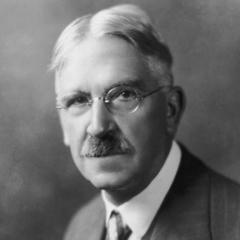
John Dewey
John Dewey was an American philosopher and educator, born on October 20, 1859, and died on June 1, 1952. He was a leading figure in the philosophy of pragmatism and had a profound impact on 20th-century education, philosophy, and the social sciences. more
You May Also Like
Source: A Common Faith
“Criticism of the commitment of religion to the supernatural is thus positive in import.”
Source: James and Dewey on Belief and Experience
Source: The Essential Dewey: Pragmatism, education, democracy
Source: James and Dewey on Belief and Experience
Source: Poems: including variant readings critically compared with all known manuscripts
“They address an Eclipse every morning, whom they call their "Father."”
Source: Selected Poems of Emily Dickinson
Source: Letters of Emily Dickinson
Source: Delphi Complete Works of Emily Dickinson (Illustrated)