“He is everywhere, the pure and formless One, the Almighty and the All-merciful. "Thou art our father, Thou art our mother, Thou art our beloved friend, Thou art the source of all strength; give us strength. Thou art He that beareth the burdens of the universe; help me bear the little burden of this life." Thus sang the Rishis of the Vedas. And how to worship Him? Through love. "He is to be worshipped as the one beloved, dearer than everything in this and the next life."”
Quote by Swami Vivekananda
Work
Swami Vivekanand's Chicago Speech: Swami Vivekananda’s Speech At World Parliament Of Religion, Chicago
Swami Vivekanand's Chicago Speech is a compilation of the speech given by Swami Vivekananda during the World Parliament of Religions held in Chicago. The speech is a pivotal moment in the history of Hindu philosophy's introduction to the Western world. It covers themes of universal brotherhood, the equality of all religions, and the importance of self-realization. The book offers insights into the thoughts and ideas that shaped Swami Vivekananda's influential role in promoting religious harmony and understanding. more
Author
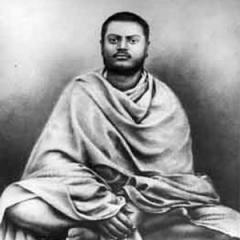
Swami Vivekananda
Swami Vivekananda (January 12, 1863 – July 4, 1902) was an Indian Hindu monk, philosopher, and social reformer. Born as Narendranath Datta in Kolkata, he was a chief disciple of the mystic Ramakrishna. He is best known for his historic speech at the 1893 Parliament of the World's Religions in Chicago, where he introduced Hinduism to the Western world. He founded the Ramakrishna Mission in 1897, focusing on social service, education, and interfaith harmony. His teachings emphasized self-realization, service to humanity, and the unity of all religions. He wrote extensively on yoga and Vedanta philosophy, influencing global spirituality and Indian nationalism. He died at the age of 39, leaving a lasting legacy as a bridge between Eastern and Western thought. more
You May Also Like
“May the shadow of the Almighty ever rest on all those you love.”
Source: Complete Works
Source: The Complete Works of Swami Vivekananda
Source: The Complete Works of Swami Vivekananda
“The Bhakta (devotee) renounces all little loves for the almighty and omnipresent love.”
Source: The Complete Works of Swami Vivekananda
Source: The Complete Works of Swami Vivekananda
Source: Complete Works
“Through the grace of the Almighty Power, it is sure to manifest itself in time.”
Source: Vivekananda Reader
“Beware of men bearing flowers.”
Source: Curriculum Vitae: A Volume of Autobiography