“We inherit every one of our genes, but we leave the womb without a single microbe. As we pass through our mother's birth canal, we begin to attract entire colonies of bacteria. By the time a child can crawl, he has been blanketed by an enormous, unseen cloud of microorganisms--a hundred trillion or more. They are bacteria, mostly, but also viruses and fungi (including a variety of yeasts), and they come at us from all directions: other people, food, furniture, clothing, cars, buildings, trees, pets, even the air we breathe. They congregate in our digestive systems and our mouths, fill the space between our teeth, cover our skin, and line our throats. We are inhabited by as many as ten thousand bacterial species; those cells outnumber those which we consider our own by ten to one, and weigh, all told, about three pounds--the same as our brain. Together, they are referred to as our microbiome--and they play such a crucial role in our lives that scientists like [Martin J.] Blaser have begun to reconsider what it means to be human.”
Quote by Michael Specter
Author
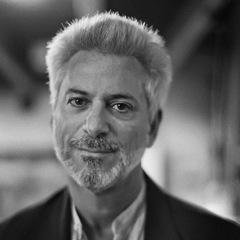
Michael Specter
Michael Specter is a renowned American journalist known for his in-depth reporting on science, medicine, and global health issues. Since the 1980s, he has been committed to uncovering the truth behind complex topics and promoting public awareness of important issues. more
You May Also Like
Source: In Praise of Idleness and Other Essays
Source: Gravity
Source: The Soil Will Save Us: How Scientists, Farmers, and Foodies Are Healing the Soil to Save the Planet
Source: Culturing Life: How Cells Became Technologies
“Never get used to the darkness. It can make you lose your inner light.”
“Macro world has to love the micro world because its life depends on it!”
Source: The Regenerative Grower's Guide to Garden Amendments: Using Locally Sourced Materials to Make Mineral and Biological Extracts and Ferments
Source: The Emperor's New Drugs: Exploding the Antidepressant Myth
Source: The Laws of Medicine: Field Notes from an Uncertain Science