Quotessence
Home / Quotes / Quote by Friedrich Nietzsche

Quote by Friedrich Nietzsche

“Während der Kritiker in Theater und Concert, der Journalist in der Schule, die Presse in der Gesellschaft zur Herrschaft gekommen war, entartete die Kunst zu einem Unterhaltungsobject der niedrigsten Art, und die aesthetische Kritik wurde als das Bindemittel einer eiteln, zerstreuten, selbstsüchtigen und überdies ärmlich - unoriginalen Geselligkeit benutzt, deren Sinn jene Schopenhauerische Parabel von den Stachelschweinen zu verstehen giebt; so dass zu keiner Zeit so viel über Kunst geschwatzt und so wenig von der Kunst gehalten worden ist. Kann man aber mit einem Menschen noch verkehren, der im Stande ist, sich über Beethoven und Shakespeare zu unterhalten? Mag Jeder nach seinem Gefühl diese Frage beantworten: er wird mit der Antwort jedenfalls beweisen, was er sich unter „Bildung“ vorstellt, vorausgesetzt dass er die Frage überhaupt zu beantworten sucht und nicht vor Ueberraschung bereits verstummt ist. Dagegen dürfte mancher edler und zarter von der Natur Befähigte, ob er gleich in der geschilderten Weise allmählich zum kritischen Barbaren geworden war, von einer eben so unerwarteten als gänzlich unverständlichen Wirkung zu erzählen haben, die etwa eine glücklich gelungene Lohengrinaufführung auf ihn ausübte: nur dass ihm vielleicht jede Hand fehlte, die ihn mahnend und deutend anfasste, so dass auch jene unbegreiflich verschiedenartige und durchaus unvergleichliche Empfindung, die ihn damals erschütterte, vereinzelt blieb und wie ein räthselhaftes Gestirn nach kurzem Leuchten erlosch. Damals hatte er geahnt, was der aesthetische Zuhörer ist.”

Quote by Friedrich Nietzsche

Work

Author

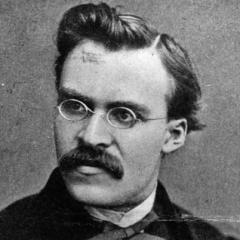
Friedrich Nietzsche
Friedrich Nietzsche

Friedrich Nietzsche was a German philosopher, cultural critic, poet, and writer whose works have had a profound impact on subsequent philosophy, literature, and thought. His ideas revolve around concepts such as the 'will to power', the 'Übermensch', and the 'eternal recurrence'. more

You May Also Like

“Very beautiful things become harder to like the more we give ourselves over to the spectacular, sexy, shocking, ultra-sensual, fashionable art and ethics of Modernity. So far as acquiring good taste is concerned, balance is a myth. Every blockbuster film a man watches makes the task of reading Paradise Lost and Jane Eyre seem more dull and more pointless. Every Top 40 song he listens to makes Mozart and Bach more incomprehensible.”

“Most people choose the music they listen to, the books the read, and the films they watch because of some event which has lately taken place in their own lives. People who are in love listen to love songs, people who are sad listen to sad songs, people who are angry listen to angry songs. Love songs are instructive for the young man in love because they teach him how to think about love and how to assign meaning to the events which occur in a romance. Sad songs teach sad people what their sadness is. Joyful songs instruct listeners on the activities and sentiments that are appropriate to joyful people. Mediocre art asks little of us, though, and so mediocrity trains hearts to shallowness, simplicity, and selfishness. In much the same way that an unpracticed, unused body will wither, bloat, and become incapable of otherwise normal tasks, so will the unpracticed and unused soul.”

“An egalitarian culture (which is no longer particular to progressives, but de rigueur among conservative Christians, as well) cannot fail to hate beauty, for beauty is riotously unfair. The more acclimatized to socialist thought America becomes, the less talent will be allowed to matter. The late aggrandizement of pretentious hacks like Jackson Pollock and Mark Rothko betrays the progressivist’s frustration with the inequalities beauty invariably establishes.”

“The average man sees an ugly avant-garde painting, learns it sold for a hundred million dollars, and cannot help responding, “But I could have painted that,” which is exactly the point. The progressive art critic might not claim the beauty of Pollock’s paintings was inherent in the paintings themselves, but in the ideas the painting communicates— although, it should be noted, every art critic has much to gain in championing art which cannot be understood without an interpreter.”

“Physical beauty is eminently more impressive, visceral, and humbling than artistic Beauty. Were a human being the likes of Nicole Kidman or Paul Newman to stand on display in the Metropolitan or the Louvre, and were patrons of the museum able to gaze with impunity—not covertly and from a distance, but from point blank range as though the living spectacles were mere portraits— many people would quickly leave behind the artistic beauty of Rembrandt and Titian.”

“Beauty is a liability. “Beauty will save the world,” but don’t tell the Trojans that. “Save the world? Beauty is tearing the world apart!” Any starry-eyed messiah quoting Dostoyevsky from the walls of Troy would have been pitched over. The beauty of Helen threw the cosmos out of whack. The beauty of Sarai jeopardized Abram’s trip into Egypt. So, too, a beautiful sunbather may upset the peace of a family trip to the beach and a beautiful priest might easily distract from mass or compromise confession.”

“As soon as one generation undertakes a project which can be finished in a single lifetime, their children have incentive to scrap that project in favor of projects more suited to their own tastes and values. Any social or cultural project which will take fifty years to accomplish encounters profound existential threats halfway through, for everyone who started the project begins to age out of productivity and those have just entered the project have both incentive and ability to redirect time and funds to a more fashionable project which does not seem so old-fashioned.”