Quotessence
Home / Quotes / Quote by Joseph Conrad

Quote by Joseph Conrad

“Il restera toujours la peur. Un homme peut détruire toute chose en lui-même : l'amour, la foi, la haine et même le doute. Mais aussi longtemps qu'il tient à la vie, il ne peut pas détruire la peur.”

Quote by Joseph Conrad

Author
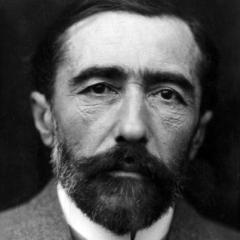
Joseph Conrad
Joseph Conrad

Joseph Conrad, born on December 3, 1857 in Poland and died on August 3, 1924 in the United Kingdom, was a renowned British author of the late 19th and early 20th centuries. He is known for his profound descriptions of maritime life and his insightful explorations of human nature. more

You May Also Like

“In the outworks of our lives, we were almost strangers, but we shared a certain outlook on human life and human destiny, which, from the very first, made a bond of extreme strength . . . . At our very first meeting, we talked with continually increasing intimacy. We seemed to sink through layer after layer of what was superficial, till gradually both reached the central fire. It was an experience unlike any other that I have known. We looked into each other's eyes, half appalled and half intoxicated to find ourselves together in such a region. The emotion was as intense as passionate love, and at the same time all-embracing. I came away bewildered, and hardly able to find my way among ordinary affairs.”

“Conrad tillhör de sjömän som får uppleva hur ångan triumferar och seglen försvinner från haven. Han befinner sig mitt inne i ett väldigt maktskifte. En tusenårig tradition bryts och ett helt nytt element förs in. På segelfartyget är det kaptenen och hans män som är förmedlarna mellan Gud och världen. De fångar in och tyglar vinden som driver fartyget framåt. Seglaren lever i nära förbindelse med naturen, som han måste böja sig för, som han betjänar och utnyttjar. När ångan kom, togs makten från kaptenen och gavs åt maskinisten i maskindjupet. Man seglade inte på havet längre utan plöjde sig genom det. Befälet på bryggan flyttades ned, förnedrades, hade blott själva navigeringen kvar och inte kraftöverföringen.”

“The social organization of Heart of Darkness – captured in the corporate culture of the ‘Company’ – is a metonym for modernity. It is powerfully linked to the psychic through the symbolic order. In the novel’s primal scene, young Marlow pores over maps, lingering over the ‘blank spaces’. ‘The biggest – the most blank, so to speak’ is the heart of Africa. From the Western perspective, these blank spaces are but undiscovered dominions, lacking proper social organization, civilization and especially enlightenment. It is somewhat perplexing, then, to find that the exploration and mapping that take place between the time of Marlow’s youth and maturity appear not as illumination but darkening: [B]y this time it was not a blank space any more. It had got filled since my boyhood with rivers and lakes and names. It had ceased to be a blank space of delightful mystery – a white patch for a boy to dream gloriously over. It had become a place of darkness.”

“Sometimes fate or life or whatever you want to call it, leaves a door a little open and you walk through it. But sometimes it locks the door and you have to find the key, or pick the lock, or knock the damn thing down. And sometimes, it doesn't even show you the door, and you have to build it yourself. But if you keep waiting for the doors to be opened for you... I think you'll have a hard time finding single happiness, let alone that double portion.”

“I’m not sure,” she said. “There’s no one answer to that. You have to find your own way. Sometimes I try to erase myself. I imagine a big pink soft soap eraser, and it’s going back and forth, back and forth, and it starts down at my toes, back and forth, back and forth, and there they go-poof!-my toes are gone. And then my feet. And then my ankles. But that’s the easy part. The hard part is erasing my senses-my eyes, my ears, my nose, my tongue. And last to go is my brain. My thoughts, memories, all the voices inside my head. That’s the hardest, erasing my thoughts.” She chuckled faintly. “My pumpkin. And then, if I’ve done a good job, I’m erased. I’m gone. I’m nothing. And then the world is free to flow into me like water into an empty bowl.”