Quotessence
Home / Quotes / Quote by Carla Hayden

Quote by Carla Hayden

“Libraries are a cornerstone of democracy—where information is free and equally available to everyone. People tend to take that for granted, and they don’t realize what is at stake when that is put at risk.”

Quote by Carla Hayden

Author
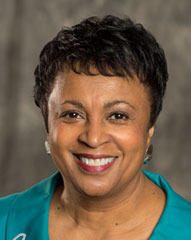
Carla Hayden
Carla Hayden

Carla Hayden is an outstanding librarian and educator. Born on August 10, 1952, she is known for her leadership and innovation in the field of libraries. more

You May Also Like

“He dabbed at his tuxedo with a damp rag, and the fungi came away easily. "Hate to do this, Bill," he said of the fungi he was murdering. "Fungi have as much right to life as I do. they know what they want, Bill. Damned if I do anymore." Then he thought about what Bill himself might want. It was easy to guess. "Bill," he said, "I like you so much, and I am such a big shot in the Universe, that I will make your three biggest wishes come true." He opened the door of the cage, something Bill couldn't have done in a thousand years. Bill flew over to the windowsill. He put his little shoulder against the glass. there was just one layer of glass between Bill and the great out-of-doors. Although Trough was in the storm window business, he had no storm windows on his own abode. "Your second wish is about to come true," said Trout, and he again did something which Bill could never have done. he opened the window. But the opening of the window was such an alarming business to the parakeet that he flew back to his cage and hopped inside. Trout closed the door of the cage and latched it. "That's the most intelligent use of three wishes I ever heard of," he told the bird. "You made sure you'd still have something worth wishing for--to get out of the cage.”

“No circumstance in the world can ever prevent us from believing in God, from placing all our trust in him, from loving him with our whole heart, or from loving our neighbor. Faith, hope, and charity are absolutely free, because if they are rooted in us deeply enough, they are able to draw strength from whatever opposes them! If someone sought to prevent us from believing by persecuting us, we always would retain the option of forgiving our enemies and transforming the situation of oppression into one of greater love. If someone tried to silence our faith by killing us, our deaths would be the best possible proclamation of our faith! Love, and only love, can overcome evil by good and draw good out of evil.”

“If you want to see philosophy in action, pay a visit to a robo-rat laboratory. A robo-rat is a run-ofthe-mill rat with a twist: scientists have implanted electrodes into the sensory and reward areas in the rat’s brain. This enables the scientists to manoeuvre the rat by remote control. After short training sessions, researchers have managed not only to make the rats turn left or right, but also to climb ladders, sniff around garbage piles, and do things that rats normally dislike, such as jumping from great heights. Armies and corporations show keen interest in the robo-rats, hoping they could prove useful in many tasks and situations. For example, robo-rats could help detect survivors trapped under collapsed buildings, locate bombs and booby traps, and map underground tunnels and caves. Animal-welfare activists have voiced concern about the suffering such experiments inflict on the rats. Professor Sanjiv Talwar of the State University of New York, one of the leading robo-rat researchers, has dismissed these concerns, arguing that the rats actually enjoy the experiments. After all, explains Talwar, the rats ‘work for pleasure’ and when the electrodes stimulate the reward centre in their brain, ‘the rat feels Nirvana’. To the best of our understanding, the rat doesn’t feel that somebody else controls her, and she doesn’t feel that she is being coerced to do something against her will. When Professor Talwar presses the remote control, the rat wants to move to the left, which is why she moves to the left. When the professor presses another switch, the rat wants to climb a ladder, which is why she climbs the ladder. After all, the rat’s desires are nothing but a pattern of firing neurons. What does it matter whether the neurons are firing because they are stimulated by other neurons, or because they are stimulated by transplanted electrodes connected to Professor Talwar’s remote control? If you asked the rat about it, she might well have told you, ‘Sure I have free will! Look, I want to turn left – and I turn left. I want to climb a ladder – and I climb a ladder. Doesn’t that prove that I have free will?”