Quotessence
Home / Quotes / Quote by Clive Hamilton

Quote by Clive Hamilton

“In the marketing society, we seek fulfillment but settle for abundance. Prisoners of plenty, we have the freedom to consume in stead of our freedom to find our place in the world.”

Quote by Clive Hamilton

Work

Growth Fetish

This book delves into the concept of growth as a cultural and economic imperative, examining how it shapes modern societies and the lives of individuals within them. It investigates the consequences of relentless pursuit of growth, including environmental degradation, social inequality, and personal fulfillment issues. more
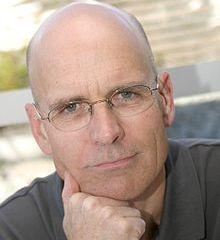
Author

Clive Hamilton
Clive Hamilton

Clive Hamilton is an Australian scholar, writer, and activist known for his contributions to environmental, economic, and social justice issues. Born on March 12, 1953, he is an honorary professor at the University of Sydney and the founding director of the Institute for Global Sustainability. more

You May Also Like

“If you want to see philosophy in action, pay a visit to a robo-rat laboratory. A robo-rat is a run-ofthe-mill rat with a twist: scientists have implanted electrodes into the sensory and reward areas in the rat’s brain. This enables the scientists to manoeuvre the rat by remote control. After short training sessions, researchers have managed not only to make the rats turn left or right, but also to climb ladders, sniff around garbage piles, and do things that rats normally dislike, such as jumping from great heights. Armies and corporations show keen interest in the robo-rats, hoping they could prove useful in many tasks and situations. For example, robo-rats could help detect survivors trapped under collapsed buildings, locate bombs and booby traps, and map underground tunnels and caves. Animal-welfare activists have voiced concern about the suffering such experiments inflict on the rats. Professor Sanjiv Talwar of the State University of New York, one of the leading robo-rat researchers, has dismissed these concerns, arguing that the rats actually enjoy the experiments. After all, explains Talwar, the rats ‘work for pleasure’ and when the electrodes stimulate the reward centre in their brain, ‘the rat feels Nirvana’. To the best of our understanding, the rat doesn’t feel that somebody else controls her, and she doesn’t feel that she is being coerced to do something against her will. When Professor Talwar presses the remote control, the rat wants to move to the left, which is why she moves to the left. When the professor presses another switch, the rat wants to climb a ladder, which is why she climbs the ladder. After all, the rat’s desires are nothing but a pattern of firing neurons. What does it matter whether the neurons are firing because they are stimulated by other neurons, or because they are stimulated by transplanted electrodes connected to Professor Talwar’s remote control? If you asked the rat about it, she might well have told you, ‘Sure I have free will! Look, I want to turn left – and I turn left. I want to climb a ladder – and I climb a ladder. Doesn’t that prove that I have free will?”

“Cora had heard Michael recite the Declaration of Independence back on the Randall plantation many times, his voice drifting through the village like an angry phantom. She didn't understand the words, most of them at any rate, but 'created equal' was not lost on her. The white men who wrote it didn't understand it either, if 'all men' did not truly mean all men.”