Quotessence
Home / Quotes / Quote by Richard Wurmbrand

Quote by Richard Wurmbrand

Work

The Church in chains

Browse quotes and source details for this work. more
Author

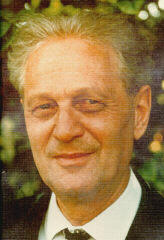
Richard Wurmbrand
Richard Wurmbrand

Richard Wurmbrand was a mysterious writer and theologian, known for his endurance and contributions to the spread of Christian faith during his【生平经历】time of suffering under Nazi Germany and Soviet rule. His works have deeply influenced the faith and lives of countless people. more

You May Also Like

“Honestly, I cannot understand what people mean when they talk about the freedom of the human will. I have a feeling, for instance, that I will something or other; but what relation this has with freedom I cannot understand at all. I feel that I will to light my pipe and I do it; but how can I connect this up with the idea of freedom? What is behind the act of willing to light the pipe? Another act of willing? Schopenhauer once said: Der Mensch kann was er will; er kann aber nicht wollen was er will (Man can do what he will but he cannot will what he wills).”

“It is not in becoming a whore that a woman becomes an outlaw in this man's world; it is in the possession of herself, the ownership and effective control of her own body, her seperateness and distinctness, the integrity of her body as hers, not his. Prostitution may be against the written law, but no prostitute has defied the prerogatives or power of men as a class through prostitution. No prostitute provides any model for freedom or action in a world of freedom that can be used with intelligence and integrity by a woman; the model exists to entice counterfeit female sexual revolutionaries, gullible liberated girls, and to serve the men who enjoy them.”

“Jean-Jacques Rousseau defined civilization as when people build fences. A very perceptive observation. And it’s true—all civilization is the product of a fenced-in lack of freedom. The Australian Aborigines are the exception, though. They managed to maintain a fenceless civilization until the seventeenth century. They’re dyed-in-the-wool free. They go where they want, when they want, doing what they want. Their lives are a literal journey. Walkabout is a perfect metaphor for their lives. When the English came and built fences to pen in their cattle, the Aborigines couldn’t fathom it. And, ignorant to the end of the principle at work, they were classified as dangerous and antisocial and were driven away, to the outback. So I want you to be careful. The people who build high, strong fences are the ones who survive the best. You deny that reality only at the risk of being driven into the wilderness yourself.”