Quotessence
Home / Quotes / Quote by Louisa May Alcott

Quote by Louisa May Alcott

“You laugh at me when I say I want to be a lady, but I mean a true gentlewoman in mind and manners, and I try to do it as far as I know how. I can't explain exactly, but I want to be above the little meannesses and follies and faults that spoil so many women”

Quote by Louisa May Alcott

Work

Little Women / Stage 3

Browse quotes and source details for this work. more

Author
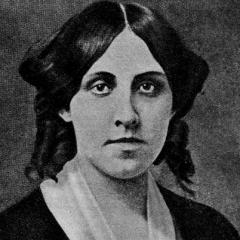
Louisa May Alcott
Louisa May Alcott

American novelist, famous for works such as 'Little Women'. Born on November 29, 1832, and died on March 6, 1888. more

You May Also Like

“You big ugly. You too empty. You desert with your nothing nothing nothing. You scorched suntanned. Old too quickly. Acres of suburbs watching the telly. You bore me. Freckle silly children. You nothing much. With your big sea. Beach beach beach. I’ve seen enough already. You dumb dirty city with bar stools. You’re ugly. You silly shopping town. You copy. You too far everywhere. You laugh at me. When I came this woman gave me a box of biscuits. You try to be friendly but you’re not very friendly. You never ask me to your house. You insult me. You don’t know how to be with me. Road road tree tree. I came from crowded and many. I came from rich. You have nothing to offer. You’re poor and spread thin. You big. So what. I’m small. It’s what’s in. You silent on Sunday. Nobody on your streets. You dead at night. You go to sleep too early. You don’t excite me. You scare me with your hopeless. Asleep when you walk. Too hot to think. You big awful. You don’t match me. You burnt out. You too big sky. You make me a dot in the nowhere. You laugh with your big healthy. You want everyone to be the same. You’re dumb. You do like anybody else. You engaged Doreen. You big cow. You average average. Cold day at school playing around at lunchtime. Running around for nothing. You never accept me. For your own. You always ask me where I’m from. You always ask me. You tell me I look strange. Different. You don’t adopt me. You laugh at the way I speak. You think you’re better than me. You don’t like me. You don’t have any interest in another country. Idiot centre of your own self. You think the rest of the world walks around without shoes or electric light. You don’t go anywhere. You stay at home. You like one another. You go crazy on Saturday night. You get drunk. You don’t like me and you don’t like women. You put your arm around men in bars. You’re rough. I can’t speak to you. You burly burly. You’re just silly to me. You big man. Poor with all your money. You ugly furniture. You ugly house. You relaxed in your summer stupor. All year. Never fully awake. Dull at school. Wait for other people to tell you what to do. Follow the leader. Can’t imagine. Workhorse. Thick legs. You go to work in the morning. You shiver on a tram.”

“Please,’” Mephistopheles added. When Harry raised a dark brow, the ringmaster elaborated. “If you bid your assistant to do something, have the courtesy of using manners. And have a care about using ‘ain’t’—it’s atrocious and distracts from your skill.” “I ain’t worried about it,” he said. “You shouldn’t be, neither. Who else can do the stunts I pull off?” He exaggeratedly glanced around. “No one, that’s who.” “You might yank rainbow-colored unicorns from purple clouds and I’d be distracted by your horrible grammar.” Mephistopheles smiled. “If not for me, do it for the poor unicorns. Magical creatures deserve proper speech.”

“As a girl, it had been firmly set down that one ought never speak until one was spoken to, and when one did, one ought not speak of anything that might provoke or worry. One referred to the limb of the table, not the leg, the white meat on the chicken, not the breast. Good manners were the foundations of civilization. One knew precisely with whom one sat in a room based entirely on how well they behaved, and in what manner. Forks and knives were placed at the ten-twenty on one's plate when one was finished eating, One ought to walk straight and keep one's hands to oneself when one s poke, least one be taken for an Italian or Jew. A woman was meant to tend a child, a garden, or a conversation. A woman ought to know how to mind the temperature in a room, adding a little heat in a well-timed question, or cool a warm temper with the suggestion of another drink, a bowl of nuts, and a smile. What Kitty had learned at Miss Porter's School---handed down from Sarah Porter through the spinsters teaching there, themselves the sisters of Yale men who handed down the great words, Truth. Verity. Honor--was that your brothers and your husbands and your sons will lead, and you will tend., You will watch and suggest, guide and protect. You will carry the torch forward, and all to the good. There was the world. And one fixed an eye keenly on it. One learned its history; one understood the causes of its wars. One debated and, gradually, a picture emerged of mankind over the centuries; on understood the difference between what was good and what was right. On understood that men could be led to evil, against the judgment of their better selves. Debauchery. Poverty of spirit. This was the explanation for so many unfortunate ills--slavery, for instance. The was the reason. Men, individual men, were not at fault. They had to be taught. Led. Shown by example what was best. Unfairness, unkindness could be addressed. Queitly. Patiently.. Without a lot of noisy attention. Noise was for the poorly bred. If one worried, if one were afraid, if one doubted--one kept it to oneself. One looked for the good, and one found it. The woman found it, the woman pointed it out, and the man tucked it in his pocket, heartened. These were the rules.”