Quotessence
Home / Quotes / Quote by Fernando Pessoa

Quote by Fernando Pessoa

Work

The Book of Disquiet: The Complete Edition

The Book of Disquiet is a seminal work by Portuguese poet and writer Fernando Pessoa, featuring a series of personal and philosophical essays, letters, and poems. It is considered a cornerstone of modernist literature, offering a deep and introspective look into the author's thoughts and experiences. more

Author
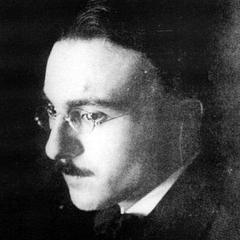
Fernando Pessoa
Fernando Pessoa

Portuguese poet known for his unique narrative style and rich inner world. Fernando Pessoa is considered one of the most influential writers of the 20th century, and his works are still widely studied and discussed today. more

You May Also Like

“But since these rolls of bread and wine bottles are needed by me, and your faces with their hollows and prominences are beautiful, and the table-cloth and its yellow stain, far from being allowed to spread in wider and wider circles of understanding that may at last (so I dream, falling off the edge of the earth at night when my bed floats suspended) embrace the entire world, I must go through the antics of the individual. I must start when you pluck at me with your children, your poems, your chilblains or whatever it is that you do and suffer. But I am not deluded. After all these callings hither and thither, these pluckings and searchings, I shall fall alone through this thin sheet into gulfs of fire. And you will not help me. More cruel than the old torturers, you will let me fall, and will tear me to pieces when I am fallen. Yet there are moments when the walls of the mind grow thin; when nothing is unabsorbed, and I could fancy that we might blow so vast a bubble that the sun might set and rise in it and we might take the blue of midday and the black of midnight and be cast off and escape from here and now.”

“Just as the Buddha taught, it’s important to see suffering as suffering. We are not talking about ignoring or keeping quiet. When we don’t buy into our opinions and solidify the sense of enemy, we will accomplish something. If we don’t get swept away by our outrage, then we will see the cause of suffering more clearly. That is how the cessation of suffering evolves.”

“... the notion that happiness and suffering are morally symmetric deserves our most meticulous scrutiny. It may, of course, seem intuitive to assume that some kind of symmetry must obtain, and to superimpose a certain interval of the real numbers onto the range of happiness and suffering we can experience — from minus ten to plus ten, say. Yet we have to be extremely cautious about such naively intuitive moves of conceptualization. … [I]t is especially true when our ethical priorities hinge on these conceptual models; when they can determine, for instance, whether we find it acceptable to allow astronomical amounts of suffering to occur in order to create “even greater” amounts of happiness.”