Quotessence
Home / Quotes / Quote by Tania James

Quote by Tania James

“I'd never written a book or a story that required meeting people, and that's not necessarily my best skill, even in English. I prefer to do my research in books.”

Quote by Tania James

Author
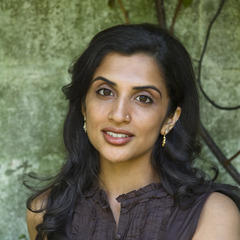
Tania James
Tania James

Tania James, born in 1980, is an outstanding figure in an unknown field. Her life experiences and contributions have not been widely documented, but her impact on the field is significant. more

You May Also Like

“Whenever we remember a series of events, we remember them different. We are constantly changing. It's a flaw, but on the other hand, when we say a word, the meaning is not what you put into it. Rather, the meaning of the word is all of the past usages of that word. Like this cloud that makes up the meaning of the word. It's your subject if you write. For instance what you put in that word and what you assume it means, even its flaw. It has a general agreement.”

“I'm my biggest critic. I want there to be no flaws when you hear it. When I think that maybe it's ready, I just hop in my car it's gotta have some bump - and go to corner stores, youngsters on the block, play it for anyone. If they get into it, I get a reaction, the song passes the hyphy test. If it's just cool, we throw it away; it's not going on the record. But if it makes you wanna move - seriously - if it makes you react the same way I felt, then it passes.”

“The ideas of non-duality and mindfulness that I address in my works are things I try to practice in my daily life. Both in and outside of the studio, it's about trying to be fully present, to accept things as they are, to frame your experience in terms of a continually unfolding moment. I feel like that's directly reflected in my formal approach: utilizing a literal use of materials, emphasizing the more ephemeral aspects of the artistic process, and so on.”

“On one level, I'm interested in how the space dictates the effect visually - how the composition of a given work changes depending on the nature of each wall. But I'm also trying to emphasize less tangible elements: the amount of time it takes to walk the gallery's perimeter; how one's physical distance affects his or her sense of the overall composition; how the size of the space creates a sense of visual rhythm. It's really a matter of seeing how much structure is necessary to impose for those things to become apparent.”