Quotessence
Home / Quotes / Quote by Pope Francis

Quote by Pope Francis

Author

Pope Francis
Pope Francis

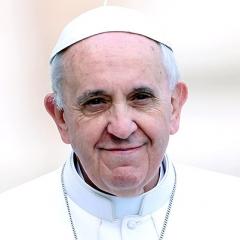
Pope Francis, born Jorge Mario Bergoglio on December 17, 1936 in Buenos Aires, Argentina, is the 266th Pope of the Catholic Church. Elected on March 13, 2013, he is the first pope from the Americas, the Southern Hemisphere, and the Jesuit order. Known for his humility, focus on the poor, and social justice, he advocates for church reform, environmental protection, and interfaith dialogue. His papacy addresses global issues like the COVID-19 pandemic and migration crises. more

You May Also Like

“This visit is meant to express my closeness to our brothers and sisters who endured the suffering, loss and devastation caused by Typhoon Yolanda. Together with many people throughout the world, I have admired the heroic strength, faith and resilience demonstrated by so many Filipinos in the face of this natural disaster, and so many others.”

“For this the Gospel offers us a serene way forward: using the three languages of the mind, heart and hands - and to use them in harmony. What you think, you must feel and put into effect. Your information comes down to your heart and you put it into practice. Harmoniously. What you think, you feel, and you do. Feel what you think and feel what you do. Do what you think and what you feel. The three languagesTo think. To feel. To do. And all in harmony.”

“May the deepest spiritual values of the Filipino people continue to find expression in your efforts to provide your fellow citizens with an integral human development. In this way, each person will be able to fulfill his or her potential, and thus contribute wisely and well to the future of this country.”

“There is no worse material poverty than one that does not allow for earning one’s bread and deprives one of the dignity of work. Youth unemployment, informality, and the lack of labor rights are not inevitable; they are the result of a previous social option, of an economic system that puts profit above man; if the profit is economic, to put it above humanity or above man, is the effect of a disposable culture that considers the human being in himself as a consumer good, which can be used and then discarded.”