Quotessence
Home / Quotes / Quote by Nikola Tesla

Quote by Nikola Tesla

“It is characteristic of fundamental discoveries, of great achievements of the intellect, that they retain an undiminished power upon the imagination of the thinker. The memorable experiment of Faraday with a disc rotating between two poles of a magnet, which has borne such magnificent fruit, has long passed into every-day experience; yet there are certain features about this embryo of the present dynamos and motors which even today appear to us striking, and are worthy of the most careful study.”

Quote by Nikola Tesla

Author
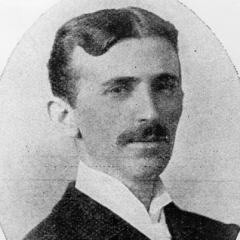
Nikola Tesla
Nikola Tesla

Nikola Tesla (July 10, 1856 - January 7, 1943) was a renowned inventor and engineer from Croatia, who later moved to the United States. He is best known for his significant contributions to the fields of electrical transmission and wireless communication. more

You May Also Like

“The vast interplanetary and vast interstellar regions will no longer be regarded as waste places in the universe. We shall find them to be already full of this wonderful medium; so full that no human power can remove it from the smallest portion of space or produce the slightest flaw in its infinite continuity.”

“The whole mass of any body is just the mass of ether surrounding the body which is carried along by the Faraday tubes associated with the atoms of the body. In fact, all mass is mass of the ether; all momentum, momentum of the ether; and all kinetic energy, kinetic energy of the ether, This view, it should be said, requires the density of the ether to be immensely greater than that of any known substance.”

“If some should accuse us as if we held that people born before the time of Christ were not accountable to God for their actions, we shall anticipate and answer such a difficulty. We have been taught that Christ is the first-begotten of God, and we have declared him to be the Logos of which all mankind partakes. Those, therefore, who lived according to reason (logos) were really Christians, even though they were thought to be atheists, such as, among the Greeks, Socrates, Heraclitus and others like them.”