“To compel a man to furnish contributions of money for the propagation of opinions which he disbelieves and abhors, is sinful and tyrannical; . . . even the forcing him to support this or that teacher of his own religious persuasion, is depriving him of the comfortable liberty of giving his contributions to the particular pastor whose morals he would make his pattern. . . .”
Quote by Thomas Jefferson
Work
Jefferson: Political Writings
This book compiles a selection of Thomas Jefferson's political writings, including his influential essays and correspondence. It offers insights into Jefferson's views on democracy, liberty, and the role of government, providing a comprehensive look at his political thought and contributions to American governance. more
Author
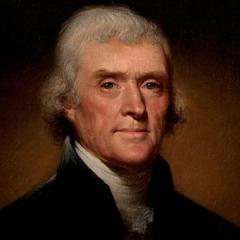
Thomas Jefferson
Thomas Jefferson was the third President of the United States, a distinguished politician, philosopher, architect, and scientist. He was born on April 13, 1743, and died on July 4, 1826. Jefferson advocated for democracy and freedom in politics and was one of the main authors of the Declaration of Independence. His political ideas had a profound impact on the founding and development of the United States. more
You May Also Like
Source: Confronting church and state: memoirs of an activist
Source: Democracy in America
Source: Democracy in America
Source: Blasphemy: How the Religious Right is Hijacking the Declaration of Independence
“Separation prevents the government from determining church policy, whether directly or indirectly.”
Source: Religion, the State & the Schools
Source: The Works of Robert G. Ingersoll