“It seems significant that according to quantum physics the indestructibility of energy on one hand which expresses its timeless existence and the appearance of energy in space and time on the other hand correspond to two contradictory (complementary) aspects of reality. In fact, both are always present, but in individual cases the one or the other may be more pronounced.”
Quote by Wolfgang Pauli
Work
Atom and Archetype: The Pauli/Jung Letters, 1932-1958
Atom and Archetype: The Pauli/Jung Letters, 1932-1958 is a compilation of the extensive correspondence between Wolfgang Pauli, a renowned physicist, and Carl Jung, a prominent psychoanalyst. The letters, spanning from 1932 to 1958, delve into their mutual interests in the intersection of physics and psychology. The collection offers insights into their discussions on quantum mechanics, the nature of consciousness, and the philosophical implications of their work. It provides a unique glimpse into the intellectual and personal dynamics between two of the most influential thinkers of the 20th century. more
Author
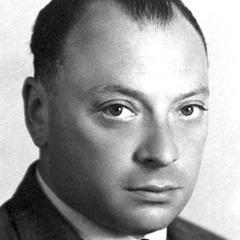
Wolfgang Pauli
Wolfgang Pauli was a distinguished physicist born on April 25, 1900, and died on December 15, 1958. He is recognized for his substantial contributions to quantum mechanics, especially for the formulation of the Pauli exclusion principle. Pauli was awarded the Nobel Prize in Physics in 1945 for his work on the explanation of the fine structure of atomic spectra. more
You May Also Like
Source: Wolfgang Pauli: das Gewissen der Physik
Source: Marx and science