“A colleague who met me strolling rather aimlessly in the beautiful streets of Copenhagen said to me in a friendly manner, "You look very unhappy"; whereupon I answered fiercely, "How can one look happy when he is thinking about the anomalous Zeeman effect?".”
Quote by Wolfgang Pauli
Work
Wolfgang Pauli: das Gewissen der Physik
Wolfgang Pauli: das Gewissen der Physik is a biography that examines the life of Wolfgang Pauli, a Nobel laureate in physics. The book covers his early years, his pivotal role in the development of quantum theory, and his commitment to the ethical implications of scientific research. It offers insights into Pauli's personality, his interactions with other scientists, and his influence on the field of physics. more
Author
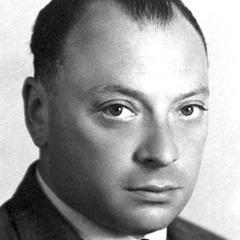
Wolfgang Pauli
Wolfgang Pauli was a distinguished physicist born on April 25, 1900, and died on December 15, 1958. He is recognized for his substantial contributions to quantum mechanics, especially for the formulation of the Pauli exclusion principle. Pauli was awarded the Nobel Prize in Physics in 1945 for his work on the explanation of the fine structure of atomic spectra. more
You May Also Like
Source: Marx and science
Source: The origin of life
Source: Science in history
“If science were communism, was it also not possible that communism could itself become a science?”
“Science is the one human activity that is totally progressive.”