Quotessence
Home / Quotes / Quote by Wislawa Szymborska

Quote by Wislawa Szymborska

Work

Poems, New and Collected, 1957-1997

This book is a compilation of various poems written over a span of four decades, showcasing the author's poetic evolution and thematic depth. more

Author
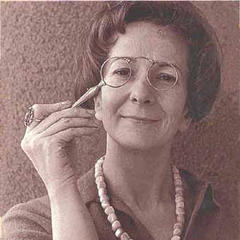
Wislawa Szymborska
Wislawa Szymborska

Wisława Szymborska was a distinguished Polish poet celebrated for her concise, witty, and thought-provoking verses. Born on July 2, 1923, in Kraków, she spent much of her life in the city, which deeply influenced her work. Szymborska's poetry often explores themes of human experience, nature, and the absurdity of life. She was awarded the Nobel Prize in Literature in 1996, making her the sixteenth woman to receive the honor. She passed away on February 1, 2012. more

You May Also Like

“If, in the very intense electric field in the neighbourhood of the cathode, the molecules of the gas are dissociated and are split up, not into the ordinary chemical atoms, but into these primordial atoms, which we shall for brevity call corpuscles; and if these corpuscles are charged with electricity and projected from the cathode by the electric field, they would behave exactly like the cathode rays.”

“As the cathode rays carry a charge of negative electricity, are deflected by an electrostatic force as if they were negatively electrified, and are acted on by a magnetic force in just the way in which this force would act on a negatively electrified body moving along the path of these rays, I can see no escape from the conclusion that they are charges of negative electricity carried by particles of matter.”

“It is conceivable that animal life might have the attribute of using the heat of surrounding matter, at its natural temperature, as a source of energy for mechanical effect . . . .The influence of animal or vegetable life on matter is infinitely beyond the range of any scientific enquiry hitherto entered on. Its power of directing the motions of moving particles, in the demonstrated daily miracle of our human free-will, and in the growth of generation after generation of plants from a single seed, are infinitely different from any possible result of the fortuitous concurrence of atoms.”