Quotessence
Home / Quotes / Quote by Joseph John Thomson

Quote by Joseph John Thomson

Author

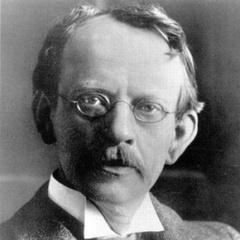
Joseph John Thomson
Joseph John Thomson

Joseph John Thomson was a renowned physicist known for his contributions to atomic theory and the discovery of the electron. He proposed the 'plum pudding model' to describe atomic structure and discovered the electron, laying the foundation for modern physics. more

You May Also Like

“As the cathode rays carry a charge of negative electricity, are deflected by an electrostatic force as if they were negatively electrified, and are acted on by a magnetic force in just the way in which this force would act on a negatively electrified body moving along the path of these rays, I can see no escape from the conclusion that they are charges of negative electricity carried by particles of matter.”

“It is conceivable that animal life might have the attribute of using the heat of surrounding matter, at its natural temperature, as a source of energy for mechanical effect . . . .The influence of animal or vegetable life on matter is infinitely beyond the range of any scientific enquiry hitherto entered on. Its power of directing the motions of moving particles, in the demonstrated daily miracle of our human free-will, and in the growth of generation after generation of plants from a single seed, are infinitely different from any possible result of the fortuitous concurrence of atoms.”

“Christianity without the cross is nothing. The cross was the fitting close of a life of rejection, scorn and defeat. But in no true sense have these things ceased or changed. Jesus is still He whom man despiseth, and the rejected of men. The world has never admired Jesus, for moral courage is yet needed in every one of its high places by him who would "confess" Christ. The "offense" of the cross, therefore, has led men in all ages to endeavor to be rid of it, and to deny that it is the power of God in the world.”

“Scientific wealth tends to accumulate according to the law of compound interest. Every addition to knowledge of the properties of matter supplies the physical scientist with new instrumental means for discovering and interpreting phenomena of nature, which in their turn afford foundations of fresh generalisations, bringing gains of permanent value into the great storehouse of natural philosophy.”