Quotessence
Home / Quotes / Quote by John Milton

Quote by John Milton

“Heaven is for thee too high To know what passes there; be lowly wise. Think only what concerns thee and thy being; Dream not of other worlds, what creatures there Live, in what state, condition, or degree, Contented that thus far hath been revealed.”

Quote by John Milton

Author
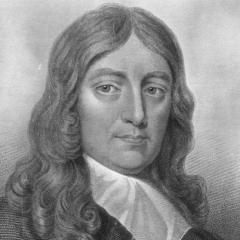
John Milton
John Milton

John Milton, born on December 9, 1608, in London, and died on November 8, 1674, was a renowned English poet and scholar. He is best known for his epic poem 'Paradise Lost,' which has had a profound impact on world literature. more

You May Also Like

“To give freedom is still more easy. It is not necessary to guide; it only requires to let go the rein. But to form a free government; that is, to temper together these opposite elements of liberty and restraint in one work, requires much thought, deep reflection, a sagacious, powerful, and combining mind.”

“Even there, in the mines, underground, I may find a human heart in another convict and murderer by my side, and I may make friends with him, for even there one may live and love and suffer. One may thaw and revive a frozen heart in that convict, one may wait upon him for years, and at last bring up from the dark depths a lofty soul, a feeling, suffering creature; one may bring forth an angel, create a hero! There are so many of them, hundreds of them, and we are all to blame for them. [...] If they drive God from the earth, we shall shelter Him underground.”

“I shall never forget how I was roused one night by the groans of a fellow prisoner, who threw himself about in his sleep, obviously having a horrible nightmare. Since I had always been especially sorry for people who suffered from fearful dreams or deliria, I wanted to wake the poor man. Suddenly I drew back the hand which was ready to shake him, frightened at the thing I was about to do. At that moment I became intensely conscious of the fact that no dream, no matter how horrible, could be as bad as the reality of the camp which surrounded us, and to which I was about to recall him.”