Quotessence
Home / Quotes / Quote by Kwame Anthony Appiah

Quote by Kwame Anthony Appiah

“There are many people of cosmopolitan temperament who are not from the elites of their societies or the world; and while, for a variety of reasons, I think a cosmopolitan spirit does naturally go with city life, that's the life of a very large proportion of human beings today. And I don't think rural people can't be cosmopolitan, in my sense.”

Quote by Kwame Anthony Appiah

Author
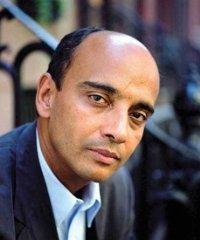
Kwame Anthony Appiah

Kwame Anthony Appiah is a renowned philosopher, born on May 8, 1954. His research spans ethics, political philosophy, African philosophy, and global ethics, among other fields. Appiah is known for his profound insights into multiculturalism and his unique perspectives on moral philosophy. more

You May Also Like

“Plenty of people within the Moslem world are not engaged in a clash with te West and don't want to do so; and none of the terrorist acts was an attack by the Moslem world on the West. They were attacks by particular groups of Moslems on particular Western individuals or nations. If we allow ourselves to de driven to thinking of every Moslem as an enemy or every Westerner as a friend, for that matter in these circumstances, we'll have no basis for moving forward.”

“I favor a form of cosmopolitanism that takes nations very seriously, particularly because of the role of national law in sustaining or, unfortunately, undermining human rights. Some cosmopolitans take the metaphor of global citizenship - the etymology of the word, after all, just comes from a Greek phrase meaning citizen of the world - to rule out taking national citizenship seriously. I think that's a big mistake. Why can't I be loyal to America and to humanity? After all, I can be loyal to America and to New York city!”

“We can't literally talk with everybody else on the planet or even with representatives of every group. But we can be in favor of the respectful exchange of ideas in ways that don't presuppose that all the right answers are on our own side. Still, we should all have moral bottom lines. Once genocide or torture begins the priority shifts from understanding to stopping it. One hope I have for the global conversation as instantiated in human rights treaties is that we are slowly coming to consensus on certain moral baselines.”

“There are many agreements across the so-called "world religions," at a certain level of abstraction. But when it comes to applying them in concrete situations they may lead to incompatible decisions. As an example, some people think that Christian ideas of sexual modesty suggest that homosexuals should be locked up, some people think that they mean that the churches should recongize gay marriages. But everyone believes in sexual modesty. I think there are universal moral truths, whether or not everyone accepts them. Here's one very low level but important one: it's very bad to torture people.”

“When philosophers talk about reason they often have in mind Having been in the business of philosophy more than half my life, I have learned that reason doesn't change many minds. But there's a more ordinary sense of resonableness, which involves not just logic but a sensitivity to other peoples real concerns, a desire to understand, even when you don't agree. Many people are reasonable in this way.I'm willing to think that the world will be made better by the conversations of reasonable people, even if there are unreasonable people and people who don't want to converse as well.”

“I've long had the idea that the factors that are most important in determining what we believe, how we live, and what we accomplish are matters of accident. That is, we did not choose where to be born, who our parents would be, or what we would look like. Yet those factors play an enormous role in almost everything about is. W/regard to issues of cosmopolitanism, the most obvious point is that how we identify ourselves in terms of nationality, cultural subgroups, and religion are all pretty much a function of where we were born.”

“The magazine business is dying. It's a hard time for publishing. It does seem that everyone is much more opinionated now. I think there's probably more room for making opinionated illustrations. There was a time when Time magazine and Newsweek would have a realistic painted cover. A friend of mine used to do a lot of those paintings and he was told by the art director at one point, we are switching to photography. It seems that if someone saw a painting on a cover, it took a while to do, it must be old news. Photography became more immediate.”