Quotessence
Home / Quotes / Quote by D. H. Lawrence

Quote by D. H. Lawrence

Work

Delphi Complete Works of D.H. Lawrence (Illustrated)

The Delphi Complete Works of D.H. Lawrence (Illustrated) is a meticulously curated compilation of the renowned author's literary output. This collection offers readers a comprehensive view of Lawrence's writing, accompanied by illustrative elements that enrich the narrative. It includes novels, short stories, poetry, and essays, showcasing the breadth of Lawrence's literary achievements. more

Author
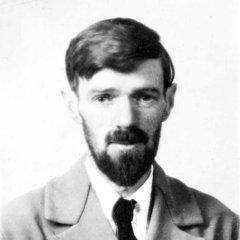
D. H. Lawrence
D. H. Lawrence

D. H. Lawrence was an English novelist and poet, born on September 11, 1885, and died on March 2, 1930. He is recognized for his distinctive prose style and his exploration of complex human relationships, particularly in the context of modernity and industrialization. His works often deal with themes of love, sex, and the struggle for individuality. more

You May Also Like

“I want relations which are not purely personal, based on purely personal qualities; but relations based upon some unanimous accord in truth or belief, and a harmony of purpose, rather than of personality. I am weary of personality. Let us be easy and impersonal, not forever fingering over our own souls, and the souls of our acquaintances, but trying to create a new life, a new common life, a new complete tree of life from the roots that are within us.”

“The poor fatherless baby of eight months is now the utterly broken-hearted and crushed widow of forty-two! My life as a happy one is ended! the world is gone for me! If I must live on (and I will do nothing to make me worse than I am), it is henceforth for our poor fatherless children - for my unhappy country, which has lost all in losing him - and in only doing what I know and feel he would wish.”

“It is indolence... Indolence and love of ease; a want of all laudable ambition, of taste for good company, or of inclination to take the trouble of being agreeable, which make men clergymen. A clergyman has nothing to do but be slovenly and selfish; read the newspaper, watch the weather, and quarrel with his wife. His curate does all the work and the business of his own life is to dine.”

“We may remark in passing that to be blind and beloved may, in this world where nothing is perfect, be among the most strangely exquisite forms of happiness. The supreme happiness in life is the assurance of being loved; of being loved for oneself, even in spite of oneself; and this assurance the blind man possesses. In his affliction, to be served is to be caressed. Does he lack anything? no. Possessing love he is not deprived of light. A love, moreover, that is wholly pure. There can be no blindness where there is this certainty.”

“A full-dressed ecclesiastic is a sort of go-cart of divinity; an ethical automaton. A clerical prig is, in general, a very dangerous as well as contemptible character. The utmost that those who thus habitually confound their opinions and sentiments with the outside coverings of their bodies can aspire to, is a negative and neutral character, like wax-work figures, where the dress is done as much to the life as the man, and where both are respectable pieces of pasteboard, or harmless compositions of fleecy hosiery.”